


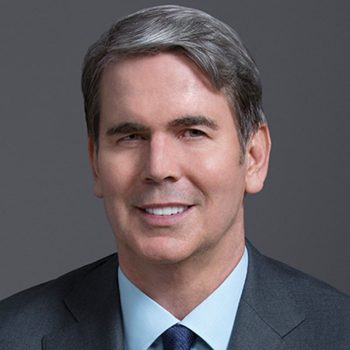
Friday’s nomination of Kevin Warsh to chair the Federal Reserve is seen by investors as a hawkish choice by President Donald Trump to replace current Chair Jerome Powell. Throughout his career, Warsh, who served as a member of the Federal Reserve Board of Governors from 2006 to 2011, has been keen to favor higher interest rates to temper inflation—something that could be at odds with Trump’s preference for lower interest rates.
Before the nomination, Warsh has been a visiting fellow in economics at the Hoover Institution and a lecturer at the Stanford University Graduate School of Business, according to a biography published on the institution’s web site. He is also a partner in Duquesne Family Office and serves on the board of directors of UPS and Coupang, the leading Korean e-commerce company. In addition, Warsh is a trustee at the Group of Thirty (an international economic and financial group) and is on the panel of economic advisers to the Congressional Budget Office.
Fed chairs, chosen from the seven-member board of governors, serve four-year terms and must be first vetted by the Senate Committee on Banking, then confirmed by a vote of the full Senate. Powell’s second four-year term as chair expires in May, although his 14-year term as a governor does not expire until January 31, 2028. Governor Stephen Miran’s term expires on January 31, and Miran told CNBC on Friday, “it’s the only [seat] available, so I would assume” that Warsh would take Miran’s seat.
Senator Thom Tillis, a Republican senator on the Banking Committee said Friday that he would block any fed chair nomination until after a justice department probe into Powell was completed.
Following the announcement of Warsh’s nomination, U.S. Treasurys—as well as metals such as gold and silver—sold off, signaling alleviated concerns about the dollar’s continued weakness.
‘Deep Understanding of the … Mandate’
“While the markets are probably relieved that a well-known, former Fed official has been nominated as the next Fed chair, they are also likely to pivot to concerns that he won’t be as dovish as they were expecting the new chair to be,” Chris Zaccarelli, CIO of Northlight Asset Management, wrote in a statement.
“Like all other Fed chair appointees, it will take some time for him to find his footing and establish his reputation as chair, but in the past we have seen a number of examples where Fed chairmen—and Supreme Court justices, for that matter—end up having a different legacy and style than people (and the presidents that appointed them) had expected.”
Dan Siluk, head of global short duration and liquidity at Janus Henderson, commented that a defining feature of Warsh’s framework is his belief that the Fed’s balance sheet has grown far beyond what is necessary for effective policy.
“But unlike prior debates around ‘tapering,’ Warsh links this shrinkage explicitly to the possibility of lower policy rates, arguing that removing the distortions created by an outsized [Fed] portfolio can reopen space for conventional rate cuts without jeopardizing financial stability,” Siluk said in a statement.
Investment Company Institute President and CEO Eric Pan commended the nomination of Warsh, saying. “Warsh’s wealth of experience in monetary policy and financial regulation, along with his deep understanding of the Federal Reserve’s dual mandate, will serve him well in this position. His unique background as a former Federal Reserve governor, twinned with his experience in global financial markets, means he has a firm foundation from which to step into this leadership role.”
Charlie Ripley, a senior investment strategist at Allianz Investment Management, said Warsh’s nomination has the potential to change U.S. monetary policy.
“While having experience as a former Fed governor, [Warsh] is known as an inflation hawk, but his return is expected to bring a more nuanced approach to the Fed’s leadership,” Ripley said in a statement. “The likelihood of potentially steering the committee towards a more expansionary policy is a risk in the short term.”
Enough Distance From the White House?
Ripley noted that continued criticism of Fed independence remains a hurdle as Trump and his administration have favored and advocated for lower interest rates.
In a statement, Eric Winograd, chief economist at AllianceBernstein, said that Warsh is qualified and credible, as he has advocated for the independent conduct of monetary policy and is not closely associated with the administration.
Jason Pride, chief of investment strategy and research at Glenmede, said the selection indicates the need for separation between the executive branch and the central bank.
“The administration’s selection of this Kevin—Kevin Warsh instead of [National Economic Council Director] Kevin Hassett—is a nod to recognizing the need for independence,” Pride said in a statement. “While Warsh may be more inclined toward rate cuts than Chair Powell, he is likely to be perceived as expressing his own opinion more than someone nominated from within the president’s inner circle.”
Jason Borbora-Sheen, an income portfolio manager at Ninety One UK Ltd., noted that Warsh appears to be less fond of strict dependence on economic data and could be more inclined than his predecessors toward low-frequency communication.
“His ability to immediately strong-arm the [Federal Open Market Committee] appears limited,” Borbora-Sheen said in a statement. “The market assumed they would get someone aligned with Trump’s preferences and hasn’t moved to price in meaningful additional cuts on the news. In the near term, the outcome of the [Fed Governor Lisa] Cook [termination] case [at the Supreme Court] remains important to Fed independence.”
Luke Bartholomew, a deputy chief economist at Aberdeen Investments, said in a statement that “as chair, [Warsh] will almost certainly push for lower interest rates, consistent with our forecast of two 25–bps cuts later this year. But he is unlikely to make much progress in shifting the Fed’s operating framework and shrinking its balance sheet, taking much of the potentially hawkish sting out of his tail.”
 |
Markets Battle Data Blackout, Cloudy Fed Outlook |
 |
What Scott Bessent’s Appointment Means for Institutional Investors |
 |
Janet Dhillon Confirmed by Senate as PBGC Director |
Tags: Federal Reserve