

The availability of pension fund income to retirees in a country is one indicator of how much people can spend in retirement. Countries dominated by defined contribution plan retirement systems continue to work on how best to convert retirement savings into retirement income and research shows that when people are not confident about income in retirement, spending slows.
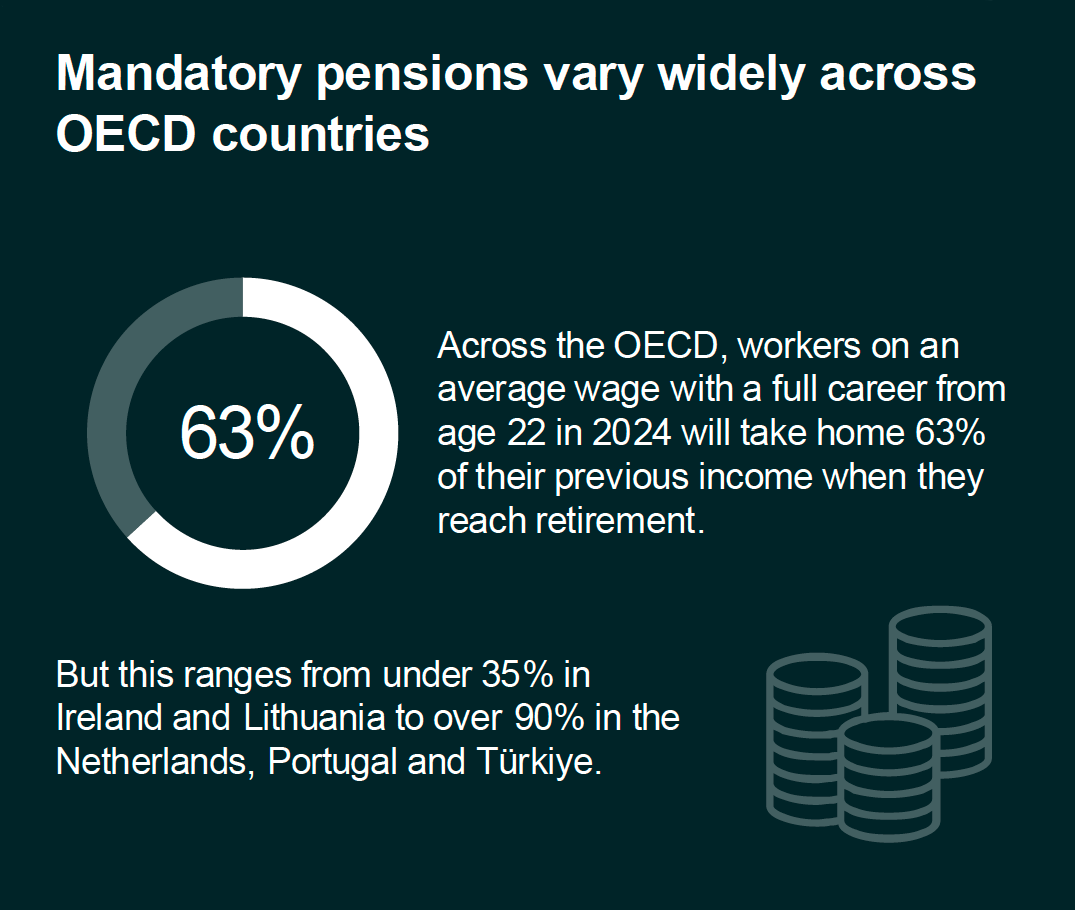
In a global consumption-based economy, the amount consumers can spend will drive economic activity and demographics will determine how many consumers are at or above traditional retirement age. Population trends show that as the developed world ages, the share of older people is growing rapidly. The long-term economic impact is not predestined, but data from the Organization for Economic Co-operation and Development shows, across its 38 member countries, people are aging and the amount of money they take home from pensions varies greatly.
On average across the OECD, the share of people age 65 and older per 100 people age 20-64 is projected to increase from 33 in 2025 to 52 in 2050; both well above 22, where it was in 2000. Over the coming 25 years, populations in OECD countries will age almost twice as fast as over the last 25 years, the organization reported in “Pensions at a Glance 2025,” published in November.
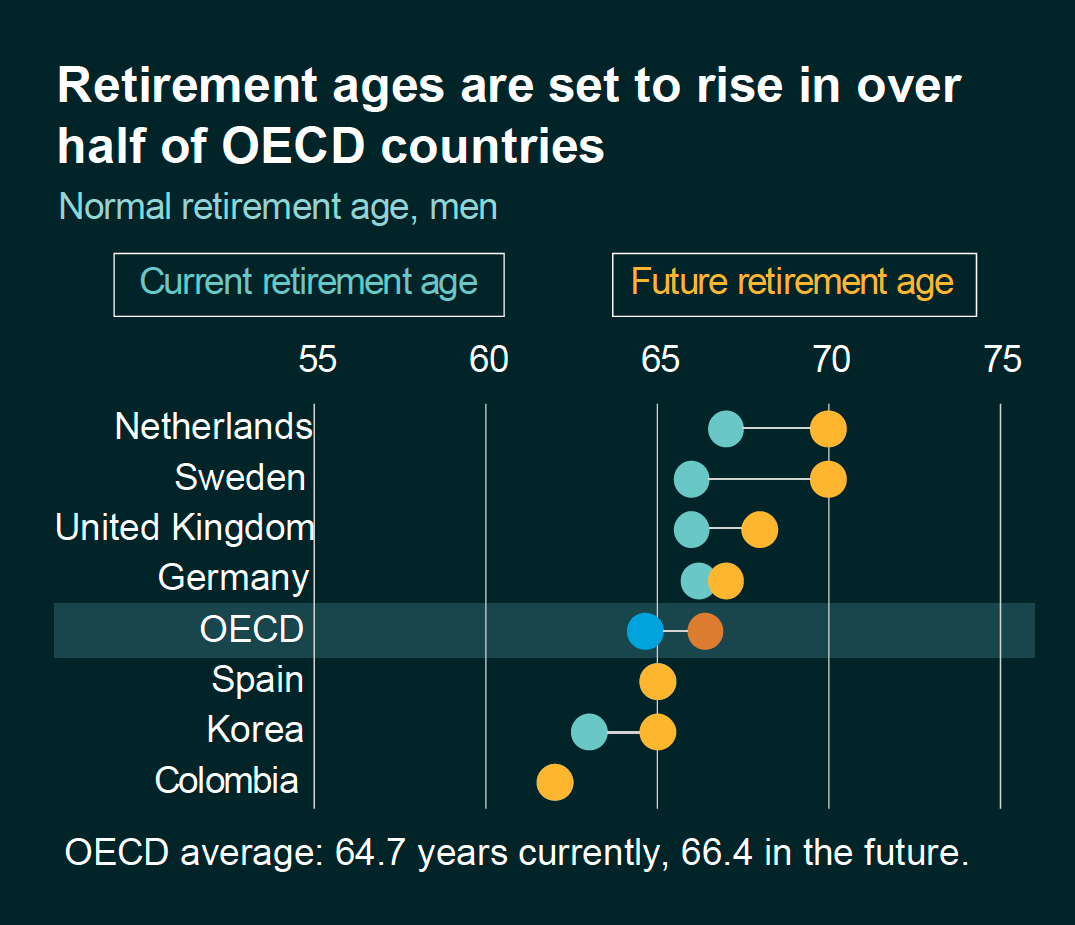
At the same time, countries are raising the age at which people can retire. The OECD reported that normal retirement age will increase in more than half of its member countries based on current legislation. Future retirement ages range from 62 in Colombia for men (57 for women), while Luxembourg and Slovenia will rise to 70 years and in some countries, especially in Europe, even older.
Below, find data that puts some of the trends in context.
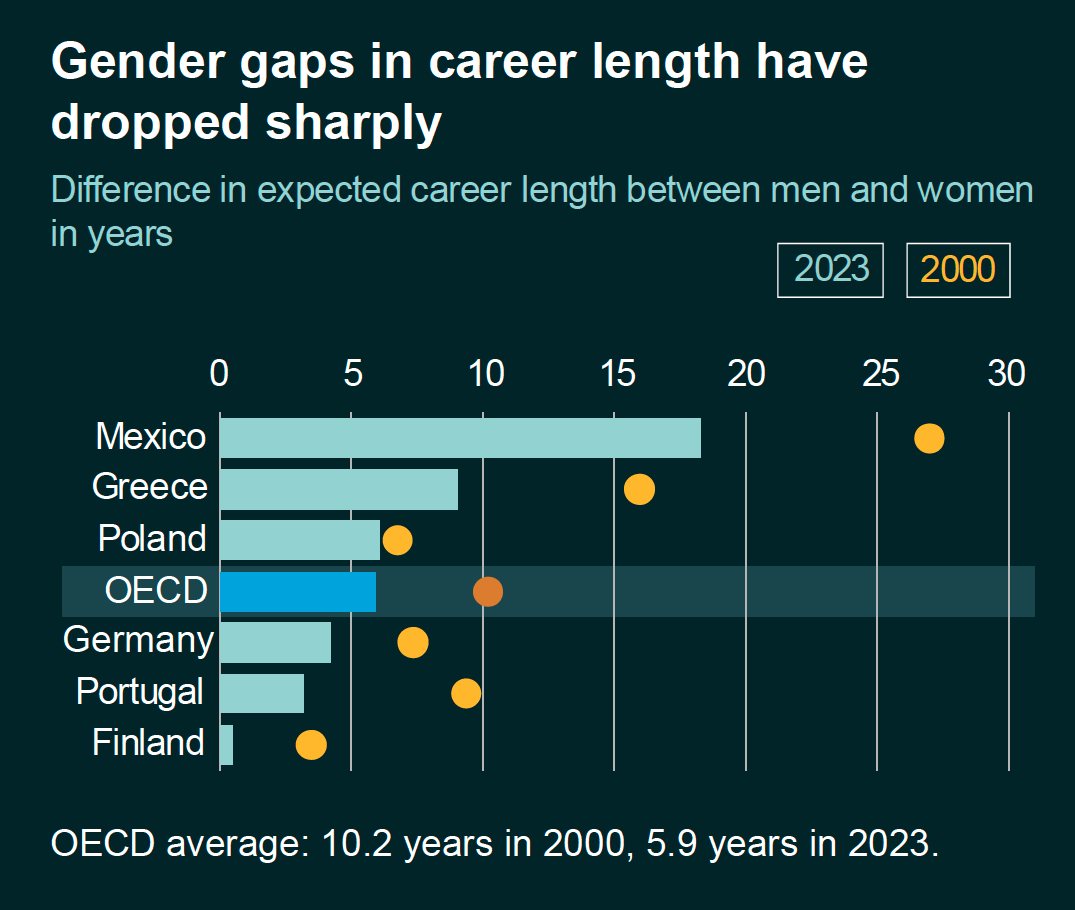
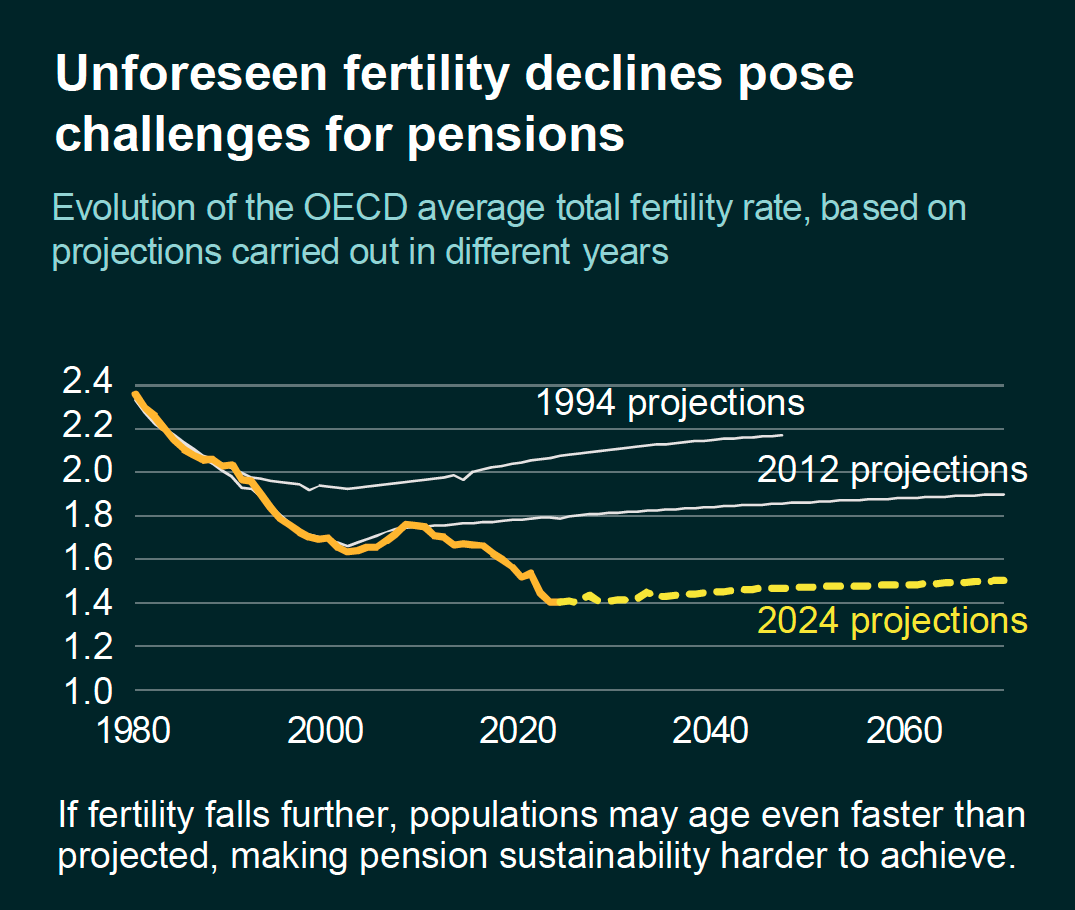
Source: OECD (2025), Pensions at a Glance 2025: OECD and G20 Indicators, OECD Publishing, Paris, https://doi.org/10.1787/e40274c1-en.
Information about the countries that are members of the OECD is available from the organization.
Tags: demographics, global economy, OECD, pension spending