


Jared Gross, head of institutional portfolio strategy at J.P. Morgan Asset Management, in a recent paper, suggested exchange-traded funds as tools to maintain liquidity and flexibility when rebalancing portfolio exposures away from growing concentration risk, especially in passive global equity portfolios. Because the U.S. represents more than 60% of global equity market capitalization, passive global equity allocations are trending toward being “less global and less diversified,” he wrote.
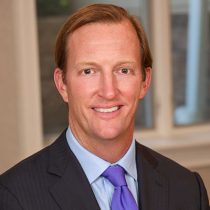
Jared Gross
Given the rapid valuation growth of some U.S.-based mega-cap technology companies and the possibility of more colossal initial public offerings to come, Gross proposed the ETF market as a tool for rebalancing without requiring a wholesale change of equity policy weights.
Gross spoke with CIO Executive Editor Amy Resnick this month about what investors can do if they are concerned about global equity concentration risk by region, sector and strategy. The interview was edited for clarity and conciseness.
CIO: Your paper addresses how allocators can use exchange-traded funds to add flexibility, liquidity and transparency to their portfolios and reduce exposure to concentration within their passive benchmark.
GROSS: I think you really kind of hit the nail on the head as far as what we were trying to get at with this, because there are sort of two layers to it. One is the … macro layer of investors who look at a passive global benchmark, … usually … the MSCI All Country World Index. …. They assume, given the breadth of that benchmark, that it provides … broadly diversified access to the global [equity market] opportunity set.
When you actually lift the hood and look at how that index is weighted today, you see that it is massively exposed to the United States. Within that United States allocation, it is heavily tilted toward large-cap, technology-focused companies. … None of this has escaped the attention of investors broadly, but it does call into question the … original purpose of that benchmark and whether … this is an opportunity or this is a moment when you should look for opportunities to de-concentrate that portfolio.
CIO: How are you suggesting doing that?
GROSS: What [investors] are not going to do, typically, is sift through the thousands upon thousands of securities and build your own portfolio. [They’re] going to look for alternative benchmarks, manager strategies, systematic strategies and so forth that will [provide] … access to a more broadly diversified mix of risk.
CIO: And you’re suggesting that one of the effective ways to do that is utilizing ETFs?
GROSS: Yes. ETFs as a vehicle choice, I think, are particularly well-suited because many of these solutions involve some degree of … either tactical adjustment by the asset allocator or they are probably expected to be temporary. I use that term lightly, because temporary could be weeks or months, it could be, potentially, years. But … the ability to move in and out of markets quickly and efficiently with a sort of transparency that ETFs provide is a good thing. … It doesn’t mean you couldn’t achieve something similar if you used a separate account or if you used a mutual fund. But ETFs, I think, have emerged and have sort of established themselves as being a very effective vehicle for … tactical portfolio adjustments. … I think this is a very good use case for ETFs, even though it’s not the only path that you could go down.
CIO: Do you mean that ETFs serve as portfolio building blocks?
GROSS: That’s exactly right. I think what many investors may not fully appreciate is how broad that tool kit is. Because within the ETF space, … when they first emerged, most ETFs were passive equity strategies. Over time, they have grown in a number of dimensions.
One dimension is they have expanded into other asset classes—fixed income and elsewhere. They have moved from passive to active. They have also grown to encompass systematic strategies [such as] factor-based allocations, which essentially are alternative models of weighting the security-level allocations, rather than just using cap weighting, which is the baseline for most passive strategies. Now there are an increasingly large number of … what I would call risk management strategies that embed options to protect portfolios against extreme moves.
CIO: How does that work?
GROSS: When you reflect on where we are today, we have a very concentrated exposure to a very highly valued U.S. market. It may be some investors would say, “I don’t feel comfortable pushing down on the weight [of U.S. stocks in the portfolio], but within that U.S. weight, I would rather find some other forms of protection, which could be active management, systematic or risk management.”
CIO: Are you suggesting an overlay or just a differently constructed portfolio?
GROSS: A good example would be … [using] call options to sell upside and produce a lot of income. The blended mix of risk and return tends to have less volatility than . ..just being exposed to the index alone. There are also versions … of hedged strategies where you sell a call option. So you give away some upside and you buy downside protection—you’re essentially collaring the space.
This [offers] exposure to the index, but within a boundary. … This is just an example of a strategy where an investor says, “I feel like I have maybe more exposure to the U.S than I would like.” [That investor] may not be prepared to reweight the benchmark itself to, say, … more Europe, more Japan, more emerging markets. But if [the investor doesn’t] feel comfortable doing that, [they] might say, “I just want to reduce the risk I’m taking within the U.S. piece of the portfolio.” [They] could do that by pivoting from cap weighting to active [weighting], potentially, if you have more of a value bias or a quality bias in your portfolio, or you can do it in a more mechanical way by using some of these option-based strategies.
But either way, you’re likely to have a reduced amount of risk, which I think, again, given where we are in the cycle and where the markets are right now, might feel very comfortable to some investors as a way to take a little bit of that potential volatility off the table.
CIO: For an institutional audience, what kind of asset owner would you see this approach being most attractive to? A pension fund, a smaller endowment, a foundation?
GROSS: I think it could be all of the above. You know, one thing we’ve observed is that pensions, … particularly corporate pensions, … used to have very large public equity allocations. … They had a lot of individual managers doing individual things. Particularly in corporate pensions, those equity portfolios have shrunk over the years. … It’s not uncommon to see a corporate pension that may be exposed to the global equity market either entirely through a passive [MSCI] ACWI-style benchmark or that may be a large portion of their remaining equity. … If your starting point is a passive global equity portfolio, regardless of how large it is and regardless of how many other things you might have, … the premise of the paper is that that is an increasingly concentrated risk that may not reflect your original intent in terms of gaining broad, diversified exposure to the global markets. … If it’s only 5% of your portfolio, you may not feel that it’s a large enough problem to … deal with affirmatively, but if it’s 40% of your portfolio, you might very easily decide that this is a problem you want to address in a more direct way.
CIO: How does the active vs. passive investing discussion fit in?
GROSS: I think this is a case where you have to separate … two arguments about active versus passive. There is … a very well-established debate about where and how active management in public equities can be successful. The general consensus over time has been that the larger markets and the more heavily capitalized markets are more challenging for active managers to generate positive returns on a consistent basis.
There are always active managers who are outperforming these benchmarks. The real challenge is finding an individual manager who does so with consistency. That’s not impossible either—there are managers who do that with consistency.
But … I think there has been a general awareness on the part of investors that in those types of market environments choosing a passive strategy is … less of a concern … because you’re likely giving up … less potential alpha, and you’re sidestepping the risk of manager underperformance and so forth. So that’s one side of the active-passive debate.
There’s another side, which is, “Does the index construction methodology—particularly with respect to cap weighting, the sort of momentum bias that that imparts to portfolios—is that something that you can and should rely on across time to always produce a better outcome?” I think in that respect, there is a much clearer sense that at moments in time and often quite frequently, it does not.
In the paper, we use … a very … resonant example, which is this: Prior to the U.S. currently having such a large allocation—currently the U.S. is north of 60% of the global benchmark—the last time we saw something like this was in the late 80s, when Japan was about 45% of the global equity market. Nobody today looks back on that and says, well, “Hindsight is 20/20, but that was a really smart allocation decision back in the late 80s.” I think most people would say that was a mistake.
Now we don’t know how the U.S. is likely to turn out, and we’re not predicting that it’s going to have anything like what happened to Japan in terms of a real estate and banking and insurance crisis and … decades of economic paralysis. That is, by no means, … our case for the U.S., but … the sort of dynamic that’s at work under the surface [today], …is rising valuations pull in more capital and concentrate that capital in an increasingly narrow part of the opportunity set. [That] … therefore leaves investors less exposed to what could be very attractive investment opportunities in parts of the world where the benchmark simply allocates less capital.
CIO: How can investors access those opportunities?
GROSS: I think, are there good companies in France and Germany and Sweden and Japan and Argentina and … Saudi Arabia? There are. If the benchmark is squeezing capital out of those markets and pushing it into a very narrow set of markets, you’re going to be less exposed to those opportunities. … This is why in this current situation, active management is a responsible choice as an alternative to index concentration … independent of the very specific questions about manager selection.
CIO: So what does your paper suggest?
GROSS: A good way to think about that is: If you observe that the U.S. has a very high weighting in the global market, in the passive benchmark, and you say, “OK, that feels uncomfortable to me,” and you’d like to reduce that, you can simply bifurcate the global benchmark into U.S. versus international. … Many investors have a target allocation to those two subcomponents … not simply mimicking what the ACWI produces. … At times they might be overweight the U.S. relative to the ACWI. At times they might be underweight. They have to make some judgment about that. …. You can essentially assert control or agency over your portfolio allocation and not be dependent on the index methodology to drive where, globally, you’re allocating capital.
In some of those markets, you may independently decide that active management is superior to passive or, based on where they are in the cycle, you might want to own more value versus growth or quality versus momentum. What the ETF complex allows you to do, with a very small set of asset-allocation choices, is to impart a lot of useful direction to your portfolio. … You don’t have to make … thousands of security-level choices. You don’t even have to go through a manager selection process if you choose not to. You can do this passively.
Or a nice step in between passive and active, for those who are interested, is systematic strategies, where [investors] [use] an alternative weighting model to … move away from cap-weighting—which has sort of pushed capital into this increasingly narrow, concentrated benchmark—and restore a little more balance by allocating against factors like growth or value or quality.
That’s become an increasingly accessible asset allocation choice. I think ETFs are the ideal vehicle to make these types of choices because … it’s also very easy to [go in and] come out, if the markets move and you decide that you no longer want to maintain that style of investment.
We talk about this in the paper … we offer some solutions to concentration, and many of those solutions can be effectively implemented with ETFs.
Over the long run, the value of having ETFs in the toolbox will remain, even if the problem goes away. So even if … there’s greater balance across the benchmark, which many investors would think of as a positive, … you still have the flexibility to use ETFs in other ways down the road.
I think it’s a good opportunity for people to embrace the vehicle choice, while at the same time solving what may be a challenging kind of investment decision as well.
Tags: active vs. passive, benchmarks, equity markets, exchange-traded funds, portfolio risk