

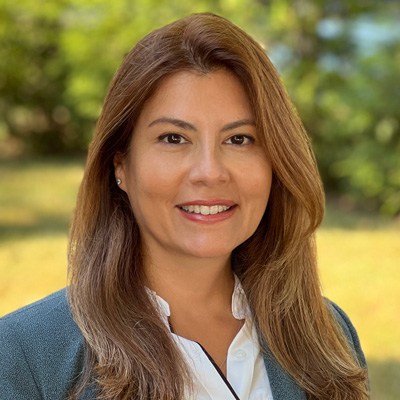
Carol Moreno
Billions of dollars sit on the sidelines while attractive climate infrastructure investment opportunities struggle to scale. Why? The constraint is not capital. It is not even lack of opportunities. What is missing are the investment platforms that allow large investors to put money to work without having to negotiate every project individually. Collaborative platforms could be the answer–-but they require the right partnerships.
Sit in any asset-owner investment committee, and the pattern is familiar. The deck says the portfolio needs more real-asset exposure. The footnotes acknowledge that clean energy and climate infrastructure opportunities are there that match a pension liability profile almost perfectly. But the committee moves on, and the climate agenda gets deferred to the next meeting.
The macro case for climate investments has never been stronger. Energy security, supply chain resilience and domestic manufacturing capacity are now geopolitical imperatives, not just environmental ideals. Yet the problem persists–-it is not a shortage of capital or of opportunities, but a shortage of structures capable of absorbing the capital at scale with the governance oversight that institutional fiduciaries require.
Outdated Structures
For nearly a decade, the conventional wisdom was that there were not enough investment-ready climate projects. As a result, a wave of programs to develop projects and reduce investment risk, such as blended finance instruments and project preparation facilities, were created to make individual projects more palatable. Some of this work has been genuinely useful.
But it has obscured the more fundamental problem: Climate-resilient infrastructure is overwhelmingly composed of smaller assets—distributed solar, storage, energy generation networks—that individually fall below the minimum deployment threshold for any institutional-sized fund. A $50 billion pension cannot efficiently negotiate and underwrite a $30 million solar portfolio. The transaction economics alone would make it impractical, even if the risk-adjusted returns were attractive.
Compounding the issue is how investors are organized. Most operate inside asset-class silos, meaning climate deals that do not fit neatly into any one asset class fall through the cracks. Rigid target asset allocations also mean that when one area underperforms, the others—including climate investments—can look overweighted and receive no additional capital. For passive institutions investing through managers, they can become subject to manager mandates that may not include a focus on climate. Every new climate deal must compete against the easier choice of committing more capital with a known manager. These barriers have nothing to do with the merit of the opportunity itself.
What these investors require is efficient deal structuring and a unified approach to financing long-duration climate projects.
Asset-Allocator-Led Collaborative Platforms
One approach to solving these challenges is through a platform model, which lets investors scale by pooling capital, leveraging expertise and sharing risks. The best platforms are built on complementary capability, not just shared values. One allocator brings deal sourcing, underwriting expertise and operating relationships. The other brings capital at scale and the long-term investment horizon that matches the assets. Together they access opportunities neither could reach alone.
Collaborative, allocator-led investment models have a few distinguishing features:
Combine Complementary CapabilitiesPartnerships are structured to blend distinct strengths, such as geographic sourcing, operational expertise, institutional networks and risk management, rather than duplicating them. Allocators will use direct partnership alongside seasoned operators to build internal expertise in complex or emerging asset classes that passive fund allocations can’t replicate;
Shape Strategy, Governance and Economics From Inception
Allocators often anchor or co-found vehicles to secure board and investment committee seats, preserving mandate control rather than surrendering it as passive limited partners;
Shape the Mandate and Co-Own the Economics
Allocators often commit capital at inception to shape mandate design, underwriting standards and climate objectives, while securing governance rights through board or investment committee representation. In some cases, they also take ownership stakes in the management company rather than paying management fees, converting a cost center into a revenue-generating asset;
Catalyze Third-Party Scale
Allocators may pool anchor commitments to de-risk a strategy, then use that credibility to attract outside institutional capital, turning a proprietary vehicle into a scaled, commercially viable platform; and
Build Repeatable Platform Relationships
Successful founding partnerships create the trust and operational infrastructure to back successor vehicles, compounding influence, knowledge and economics across additional funds.
The market is already producing working examples:
At the Systems Level
Altérra (funded in 2023 with a $30 billion commitment from the United Arab Emirates when it hosted the 2023 United Nations Climate Change Conference, COP28) is among the world’s largest climate investment funds. It allocates capital to back investor platforms by acting as an anchor limited partner and co-investor. It may deploy catalytic capital as risk mitigation capital at the platform level (not individual project level) to de-risk the broader investor pool. The design is replicable: sovereign catalytic capital, applied strategically at the investor level, crowds in institutional allocators who could not otherwise justify the first-mover risk.
By Allocators with Small Investment Teams
APG [All Pension Group] and GPIF [Government Pension Investment Fund], the Netherlands pension asset manager and the Japanese government pension fund, respectively, which collectively manage trillions in pension assets, launched a joint infrastructure investment program built on complementarity. The GPIF has massive capital but a small investment team and limited alternatives exposure, while APG brings deep in-house infrastructure capabilities and a direct investing track record. The arrangement gives the GPIF turnkey access to institutional-grade deal flow and gives APG a large committed capital partner without increasing operational overhead.
To Participate in Governance Control
The Decarbonization Partners joint venture between Temasek (owned by the government of Singapore) and BlackRock was established to invest in a global portfolio of technologies that either directly or indirectly enable the reduction in carbon dioxide emissions. The joint venture demonstrates governance-focused collaboration, combining both firms’ sourcing and expertise in underwriting sustainable technology to back companies driving measurable decarbonization outcomes.
To Crowd-In Private Capital
A consortium of Swiss pension and insurance funds entered a co-investment partnership with investor La Caisse (which manages government pension and other asset pools for the Canadian province of Quebec) committing an initial $400 million to access long-term sustainable infrastructure investments that none could access independently at this scale or with comparable diligence infrastructure. Subsequently, three additional Swiss funds joined, bringing aggregated commitments to $700 million, reflecting the collaborative model’s ability to attract institutional capital.
The most successful models will need to be designed with intent from the outset.
A platform-based allocation is a concentrated bet on the quality of the platform operator. If governance is weak, management incentives are poorly structured or the operator lacks genuine local expertise, the aggregation effect amplifies losses, rather than diversifying them. Due diligence at the platform level must be rigorous because the stakes are higher.
Platform structures often involve layers of fund vehicles and co-investment sleeves. Allocators should specify standardized underwriting frameworks, conflict management protocols between the lead allocator and co-investors, and clear audit and reporting obligations.
Climate-focused investment platforms must be treated as profit-generating businesses first and environmental initiatives second. To attract large institutional investors, platforms must prioritize strong financial performance and operate under strict corporate governance.
Moving Forward
It is clear there are knowledge and connectivity problems. Smaller, more passive, asset owners frequently do not know that larger peers with direct investment capability are actively seeking like-minded capital partners. Larger institutions, meanwhile, are often reluctant to look for collaboration opportunities that superficially resemble taking on an asset management role for peers.
For CIOs at institutions with direct-investment capabilities: consider whether you are leaving a structural opportunity unrealized by not identifying passive peers with similar time horizons and capital to deploy.
For CIOs at institutions without direct investment capabilities: the barrier to accessing institutional-grade climate infrastructure opportunities is not your internal capacity, it is finding the right lead partner.
The assets are there. The capital is there. What this moment requires is the institutional architecture to connect them-–beginning with a well-structured partnership, and scaling from there.
Carol Moreno is Director of the Investor Network at Ceres.
This feature is to provide general information only, does not constitute legal or tax advice, and cannot be used or substituted for legal or tax advice. Any opinions of the author do not necessarily reflect the stance of ISS STOXX or its affiliates.
Tags: Alterra, APG Asset Management, climate infrastructure, COP28, Decarbonization Partners, Infrastructure, Japan Government Pension Investment Fund (GPIF), La Caisse, Real Assets, system-level investing