
ETF use by North American institutional investors seems to have entered the mainstream and is being broadly applied across asset classes and portfolio functions, according to data in the Coalition Greenwich 2026 North American Institutional ETF Study, completed earlier this year by Crisil Coalition Greenwich.
ETFs are largely valued for the low-cost, low-friction access they provide institutions, often as a tool for capturing beta, rather than generating alpha. Below is a sampling of data from the study.
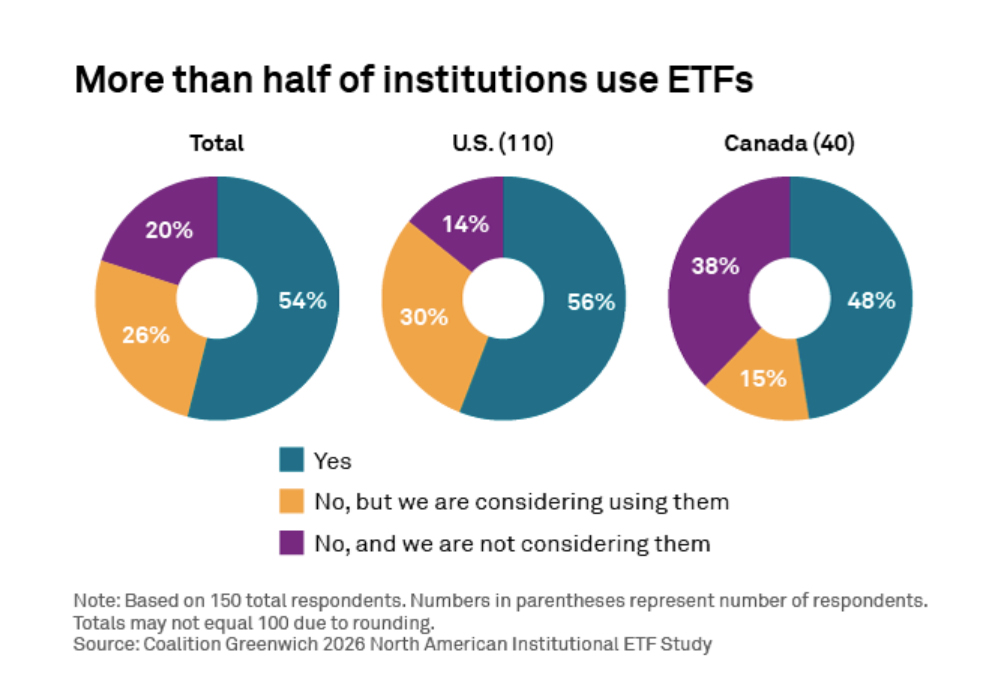
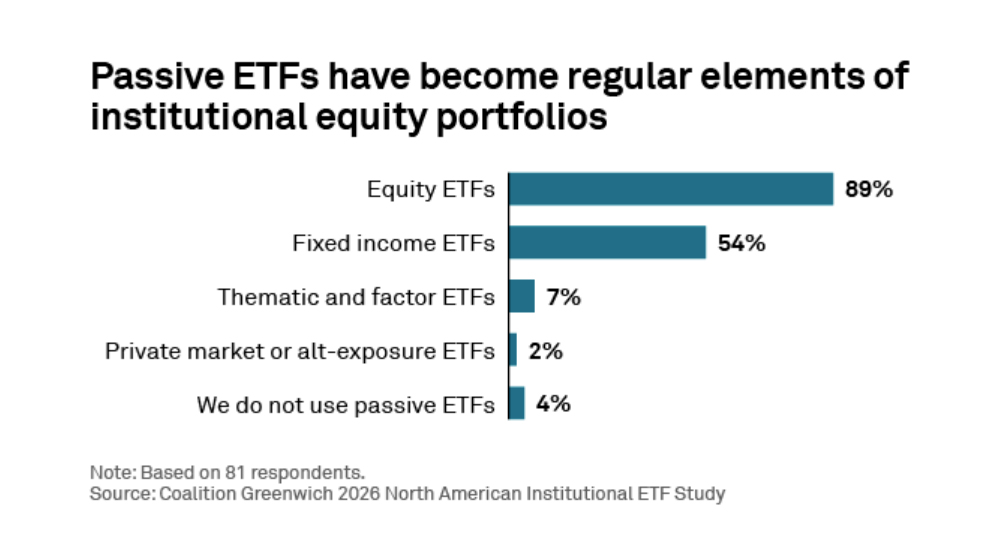
The research shows that institutional allocators of all types and sizes are continually adopting both active and passive ETFs as tools to accomplish tactical and strategic goals in their portfolios. The flexibility of ETFs for both functions expands the utility of the vehicle for CIOs and is leading to increased adoption and expanding allocations, according to Crisil Coalition Greenwich.
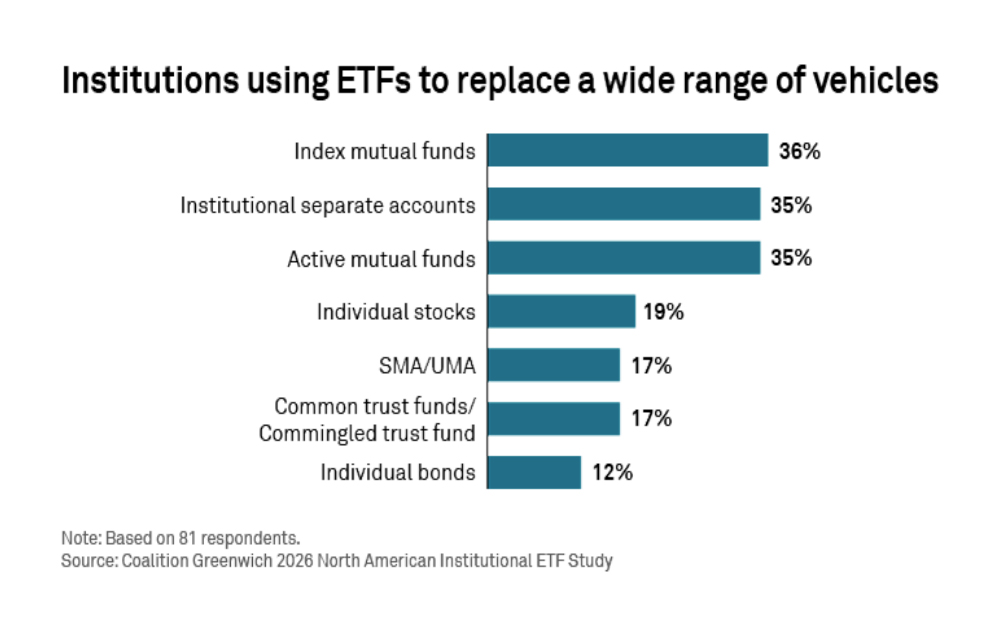
All types of Institutional allocators are using ETFs to replace other investment vehicles, including index mutual funds, institutional separately managed accounts, active mutual funds, and individual equity holdings.
Insurance companies have been actively replacing alternative asset classes with ETFs; while 40% of corporate pension funds are using ETFs to replace a variety of managed accounts, Crisil Coalition Greenwich reported.
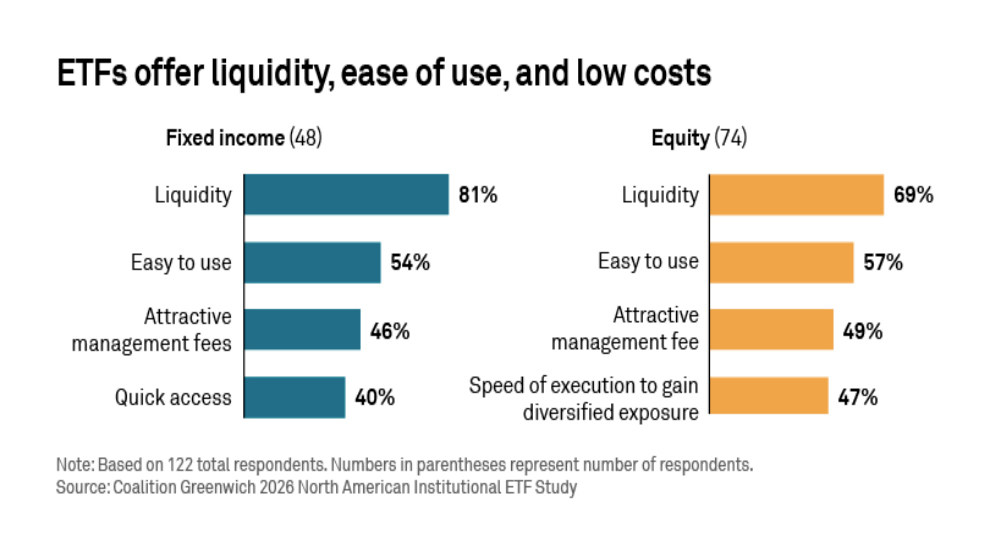
ETFs are attractive to institutional investors because, as the name implies, they are traded on exchanges. Their status as public securities means that ETFs can be easy to use and quick to buy and sell, according to Crisil Coalition Greenwich.