


Gene Podkaminer
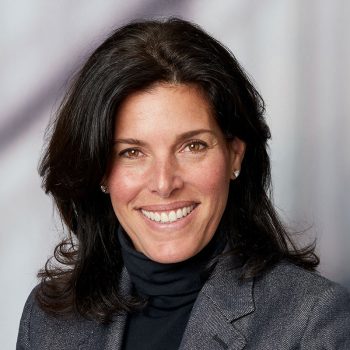
Gene Podkaminer, a senior asset allocation strategist at Capital Group, has worked across asset management and institutional investment consulting for more than 20 years. He is the author of several academic journal articles on risk factors in portfolio construction; asset allocation methodologies; and the impact of macroeconomic shocks on multi-asset portfolios.
Podkaminer spoke with CIO Executive Editor Amy Resnick on December 10 about hidden sources of risk; the ways allocators and investors can identify and analyze the risk; and how to prepare for managing volatility.
CIO: Where should we start regarding volatility? What kinds of thought processes are institutional asset owners using in 2025?
PODKAMINER: Under more of a rigid … strategic asset allocation approach—and I’m picking my words carefully here, because there is nothing on the surface wrong with strategic asset allocation—you need to understand its limitations and how it’s put together, but inherently, it’s not bad, right?
What I want to say with that caveat is that: Let’s say you have two investment teams. One is in fixed income, and the other is in equities, and you say to both of them, “Success for you means beating your benchmarks, and maybe there’s some risk budget associated with it.” You can imagine a scenario where [someone from] the fixed-income team will say, “There are premium[s] to be captured in terms of longer duration, in terms of more spread and in terms of having higher correlations with equities. I’m going to do that, because it helps me move the needle, and it means success for me and the equity team.”
CIO: But it also ultimately means chasing yield down the credit curve, the quality curve, right?
PODKAMINER: That’s exactly where I’m going to go, because then the equity team is like, “Well, gosh, emerging markets may have a higher beta than developed markets. You haven’t told me I can’t invest in all of the emerging markets I want. So I’m going to overload there.”
Then somebody is looking over this, and when they see both pieces brought together, what they’re going to observe is that the fixed-income piece has a very high correlation to the equity piece. The equity piece has a beta of likely over 1.0. Why? Because that’s how the incentives were put in place.
CIO: So those investment decisions make for a more volatile portfolio?
PODKAMINER: For the people at the top and for the boards and the stakeholders, that’s not an ideal situation. … It’s an unintended consequence of a very specialized mentality where you have your equity professionals and you have your fixed-income professionals, and there’s not a lot of crosstalk between them.
So does the high-yield team talk with the equity team [at] an asset owner? I don’t know. Maybe, maybe a little bit. … So there [are] very few points of tangency between those two silos in a … historically traditional framework.
So in terms of … hidden sources of risk that are hiding in plain sight, that’s certainly one of them. Thinking about how the organization is designed and where … we take risk and what that means for the things that are just right there next to us, [it is important to ask] … “What is adjacent to this risk?”
CIO: So, pulling back to that executive level, what is the thing that … can be utilized to best make those decisions over a long period of time?
PODKAMINER: I think that there is a lot to be said for who owns the decisions, right? Who owns a particular decision, who is responsible for it [and] who is reporting on it has a lot to do with how, ultimately, the investment is handled on risk, right?
So [that’s] kind of artificially simple, but let’s talk about global equities, right? The equity bucket is typically the largest source of risk for many asset owners, even if on a capital basis, it contains less capital than the fixed [income].
CIO: Right.
PODKAMINER: Income allocation—or the real asset allocation—because of the volatility of equities, [is] pretty risky. So imagine this thought experiment: There’s lots of different flavors of equity, there’s lots of different markets, there’s lots of different sectors and lots of different countries.
How should we, as an organization, be thinking about where we take risk in equities? I’ll give you two approaches, and you can see the difference between them.
In the first approach, I’ll call this the over-specified asset allocation approach.
You have 15 different line items for equities. You have U.S. large [cap] and U.S. small [cap], you have emerging markets, maybe you have frontier markets, you have European markets, and you have Asian markets. Perhaps you have value and growth as well. Maybe there’s a couple of other cuts that you make.
But when you sort of peel back the hood, … these are all equities. So macro drivers are going to impact that portfolio in a very similar way. But … you have that spec’d out, and you have teams that are managing these different assets … within the prescribed ranges that your asset allocation has been developed over. And again, for them, success is beating their U.S. large-cap growth benchmark or their Japanese small-cap benchmark, right? That decision is owned at the very highest level. There has been an asset allocation study, there are a lot of stakeholders involved in it. They’ve all agreed and said: “This is how we are going to map the global equity market. This is where we’re going to sit, and then the asset teams will figure out how to extract value.”
Now the counter to that is kind of Example B, where you say:
“I know that from an asset allocation and a … goal-awareness basis, I want to take some amount of equity risk in my portfolio, because it’s a compensated risk and it’s somewhere that I think I’m going to find value.”
But “I’m not going to specify at the top level what the hierarchy of those slices is going to be. Instead, I’m going to take this platter of equities, global equities, and I’m going to hand it to the investment team and say: ‘Investment team, I hired you because you have skill and you know equity markets really well and you’re better positioned to make the trade-off between large cap and small cap, between value and growth, between emerging markets and developed markets, and North American markets; that’s what you do.’”
[In that Example B], you could do it on a relatively higher frequency than I could in Example A, which was maybe has an asset-allocation study every three or five years.
So you’re still taking equity risk in both of those examples, but who owns the decision then determines how you account for risk further down the line and what success means.
In Example B, you’re acknowledging at the highest level that maybe we don’t have, or we don’t want to take on, ownership of how to slice and dice the global equity market. We’re going to have a neutral starting point and we’re going to let those specialists closest to those markets actually make the call about where they want to go and where they want to be and what timing is right.
So now I’m going to use the word devolve, but I don’t mean it in a pejorative way. I mean that you have taken a decision from a high level, and you have devolved it and you’ve moved it down to a lower level that may or may not be more appropriate, depending on … how your organization account[s] for risk in that scenario. If you’re saying, “My opportunity cost is a global equity portfolio, every shift and tilt that you take away from whatever weights you specified, that essentially is active risk and … you’re cleanly accounting for that.”
In the first scenario, it’s much less clear where some of that risk goes and where it’s handled and how it’s reported. These are extreme differences. There’s a middle path as well, right?
[Asset allocators] don’t have to go all the way to a [total portfolio approach] to see Example B.
You could say:
“I’m going to live in a strategic asset allocation world, but I’m not going to over-specify my asset allocation. So maybe I’ll have something really simple that looks like this: global equities, X%, global fixed income, Y%, [and the same for] alternatives and real assets, right? That’s how that lives.” Then you can hand that down [to] your investment teams and account for risk that way.
Again, TPA is not a panacea; it’s not the silver bullet here. I just want to point out the elements of risk budgeting, of breaking down silos and having the opportunity cost … measured against everything else in the portfolio, not just things that are nearby in the portfolio, and using risk factors as the common language.
CIO: It sounds like you’re saying: Where the decision—and where the ownership of the decision—happens is key to managing the risk.
PODKAMINER: These are not new concepts, but they’re really powerful, and I think that, ultimately, they lead to better decisionmaking because they lead to better accountability.




Tags: Volatility