

Tom Steyer
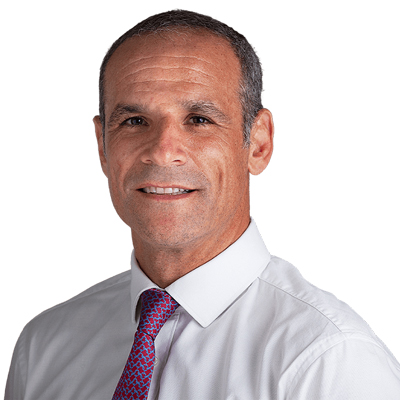
Seth Kirkham

Katie Hall
Tom Steyer’s investment firm, Galvanize Climate Solutions, is doubling down on decarbonization.
Given the size and anticipated growth of that transition—the global market for the shift to low-carbon and renewable energy sources is projected to grow to $6.47 trillion by 2032, up from $2.06 trillion in 2024, according to Fortune Business Insights.
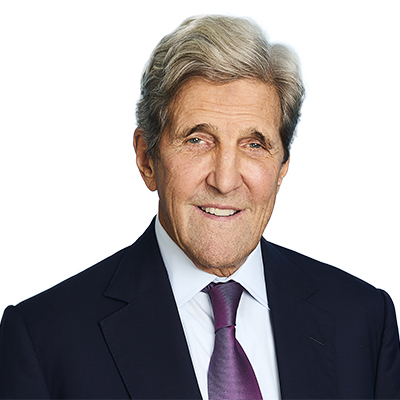
John Kerry
The multi-asset manager was started in 2021 by Steyer, the founder of Farallon Capital and a 2020 Democratic presidential candidate, and Katie Hall, the founder of Hall Capital Partners. Its team also includes former Secretary of State John Kerry, who serves as co-executive chair.
Steyer and Hall’s conviction from day one was to invest with a climate and energy transition lens.
“If you’d have Tom here, he’d say in his 40-plus-year investing career, [this is] the most exciting investment opportunity he’s seen,” says Seth Kirkham, the firm’s CIO of global equities, in an interview with CIO.
At New York Climate Week in September, Steyer said the company was having by far its “best year ever.” The firm operates across asset classes: It recently launched a $1.3 billion private credit platform anchored by an unnamed institutional investor, and it also invests in venture capital, public equities and real estate.
Galvanize’s investment thesis is that to address the risks related to rising temperatures, private capital must play a role in the solution.
“Governments are tapped out,” Kirkham says, adding that governments have not been efficient allocators of capital when it comes to the energy transition. “All of these solutions that the private markets are going to mobilize very clearly need to be better than the incumbent alternative. That’s what our public market strategy has been doing for three years.”
The firm counts 68 professionals across San Francisco, New York and London, according to a Galvanize spokesperson, and invests on behalf of institutional and ultra-high net worth investors.
“When Katie Hall and I built Galvanize, we did so with the belief that we could have the greatest impact on climate by demonstrating to the market that investing in the energy transition leads to outsized returns vs concessionary outcomes,” said Steyer—who ran Farallon from 1986 to 2012 and later dedicated his time to public service and philanthropy—last year.
Investment Lens
At the core of Galvanize’s public equities strategy is a research-driven process that integrates both financial and sustainability analysis.
“We have a library of knowledge that we pull on to try and find companies that we think have a relevant opportunity inside the transition,” Kirkham says.
The firm’s equity platform primarily invests in mature businesses, and the firm prefers to invest in companies that have a commitment to establishing and growing a climate transition pathway.
“We have not owned a single [Magnificent Seven] stock since inception, whereas we’ve seen a lot of our peers buy those names when, [before] the advent of [artificial intelligence], they had very low carbon intensity in their business, and so they convinced themselves that these are carbon-ready businesses,” Kirkham says. “We are much more interested in those companies that are committing capital to transition pathways that we think have big addressable markets in front of them.”
Through its approach, Kirkham says the firm has been able to find opportunities in public markets that far exceed market expectations, “and so Galvanize as a firm has been designed to be able to isolate those pathways that we think are most exciting and then underwrite the investments in those pathways with some edge and insight that’s differentiated from your traditional asset manager.”
Team Alignment
One of Galvanize’s biggest strengths, Kirkham says, is strong alignment between its asset class teams: “Being an aligned firm, we’re all investing in different asset classes, but through the same lens, [which] is a power of itself.”
He says that in his prior roles, synergies between multi-asset teams were limited, because each strategy invested with a different perspective on not just their market, but on the markets more broadly.
“Because my colleagues are looking at the same opportunities, just either in a different level of maturity for the business or in a different part of the capital structure, we are able to share insights across the group, across asset classes, in a way that I’ve not seen previously,” Kirkham says. “Because of a lot of these markets that we’re looking at are somewhat new and [are] being carved out, quite often, by the businesses that we’re underwriting, knowing what’s happening in the private space [and] knowing what’s happening in the project finance world can be really important in our due diligence.”
Galvanize also benefits from its impact and portfolio services team—a group of in-house science, policy, technology and climate professionals who provide an extra layer of due diligence on potential investments. These experts, given their deep expertise and verified experience, are able to ask more technical questions that an equity analyst might miss.
“I, as a simple public equities guy, would not have been able to ask any good questions when they open the cabinet and show me all the physical technology,” Kirkham says, referring to a trip to a NASA facility to examine a potential portfolio company’s tech.
This team provides Galvanize with more specialized insights than a traditional expert network might, Kirkham notes.
Related Stories:
Tom Steyer Closes $1B Climate Fund
Oregon Passes Bill to Manage Climate Change Risks
Maryland State Pension Establishes Climate Advisory Panel
Tags: climate transition, Galvanize Climate Solutions, Tom Steyer