
Rich Nuzum Speaks About What’s Next for OCIO
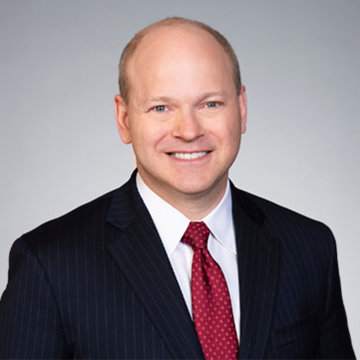
Rich Nuzum
The outsourced CIO industry is evolving rapidly—this was the theme of CIO’s most recent episode in its interview webinar series with Rich Nuzum, head of OCIO at Franklin Templeton. The former Mercer director of investments, who joined Franklin in July, spoke about the increasing demand for OCIO services, the future of OCIO, what is driving consolidation in the industry and more.
Watch the full webinar interview here.
“We are at a point where there is still no generally accepted definition of OCIO in the industry,” Nuzum said. “But if we look at the industry surveys of OCIO providers, we’ve passed more than $5 trillion in [assets under management] for the firms that report their OCIO AUM.”
Nuzum sees multiple factors contributing to the growth of the OCIO industry—including the rise of private market alternatives; the global war for in-house investment talent; the data, digital and technology arms race; and the increasing number of asset owners questioning the need to manage investments in-house.
Set up for Expansion
“More and more asset owners, investment committees [are] looking at their governance arrangements and having the humility to say: We need to focus, we’re smart, we’re well-resourced, but we need to focus on strategy and objectives and make sure we’ve got the program right,” Nuzum said. “Implementation could be done for us or, even more humbly, why are we in the investment management business? We’re a hospital, we’re a university, we’re a family office. Why are we building up our own investment management shop when there’s this community of providers that have much more skill than we have?”
Nuzum also noted that these reasons are leading certain groups of asset owners to increasingly look at outsourcing their investments, which would allow them to focus their resources on their mission, their giving and other priorities.
“It’s not that these aren’t smart, sophisticated governance bodies,” Nuzum said. “It’s actually because they’re smart, they’re looking at focusing their resources on objectives and strategy.”
Nuzum sees the underlying growth of OCIO demand coming from two broad buyer profiles. The first is the “do-it-for me profile, where the investment committee wants to focus on strategy and get advice on strategy, but then have somebody handle implementation for them. They don’t intend, on a go-forward basis, to employ their own in-house professional investment staff. … I think that’s what most people think about when they think about the growth of OCIO.”
The second group, home to much of the OCIO growth, particularly as it relates to the democratization of alternatives, Nuzum said, is the “keep up with me” category: “There you have not just a smart investment committee, but highly sophisticated in-house investment professionals who are trying to do things that have never been done before in the world, and they’re looking for a partner that can help them whiteboard that out and co-create something that is new and different and better, and then help them implement it.”
Nuzum noted that this group of investors is not looking for a partner that will tell them what to do, but could instead bring complementary expertise.
Expansion in Defined Contribution and Other Markets
Nuzum sees the OCIO industry increasingly serving defined contribution plans in the U.S., typically under a 3(38) fiduciary relationship, especially as pooled employer plans continue to grow in AUM and as alternative asset managers look to target-date funds to drive growth.
“The alternative asset classes … those all bring complexities with them, including liquidity issues and how do you get diversification over vintage years by underlying general partner … it’s just enormously complex,” Nuzum said. “Not that investing in public markets was ever easy, but it’s enormously complex when you go into private markets, and yet it’s very much [in] an individual’s interest to have that diversification opportunity, and I’m glad that the U.S. as a society, and our regulators, are finally moving to make that type of opportunity available to regular people, and not just the super wealthy.”
Nuzum noted that these alternative investment opportunities are best approached through a multi-asset-class, multi-strategy structure. Many alternative investment products available to DC plans are made with one manager, in one specific asset class and one industry segment at a specific point in time, Nuzum said.
While “those structures may be well-branded and well-marketed, they’re more vulnerable to a liquidity shock, they’re more vulnerable to—if there’s underperformance in that particular sector—having an issue that creates a reputation issue for everybody close to it, whereas a multi-asset, multi-strategy approach is more robust in terms of liquidity [and] presents less reputation risk.”
Nuzum pointed out the wide adoption of alternatives in retail and defined contribution plans outside of the U.S.
“If you and I were in Australia, we could walk in off the street to a bank or insurance company and get our money into a target-date or target-risk fund that has 35% in professionally managed alternatives,” Nuzum said. “That’s where I think the U.S. market will head over time for retail, and DC and OCIO shops are going to play a big role in helping retail and defined contribution intermediaries bring that to life,” Nuzum said. “We’re going to use our scale and capabilities to co-create products with those intermediaries that meet the need of their client base.”
OCIO Consolidation
The rise of private market alternatives is also driving OCIO consolidation, Nuzum noted. According to Chestnut Advisory, there are 134 such firms providing outsourced fiduciary management.
“Just think about the resources you need to keep up with innovation in the private credit space,” Nuzum said. “10 years ago, private credit was lending to private equity players for buyouts and distressed debt. Today, there’s 16 flavors of private credit, and they’re available in a lot more countries than they used to be.”
Nuzum noted that the yields available from the asset class, even factoring in potential defaults and a downside scenario, make the asset class attractive to asset allocation models, which Nuzum said is why private credit is the fastest-growing asset class in the world. Still, keeping up with the innovation in private credit alone is a challenge, even for a well-resourced allocator with a large manager research staff.
Nuzum also pointed to scale as a factor in OCIO consolidation.
“Because OCIOs are not in the same most-favored-nations bucket as a pension plan, an investment manager can strike a deal with them on fees, without having to turn around and offer that to all of their similarly situated … clients, because the OCIO is deemed by counsel to be in a separate MFN category.” Nuzum said. “If I’m awarding a $5 billion global equity mandate to a manager, I’m going to get much better fees than if I’m awarding $150 million mandates, so as clients move from [using] a consulting governance model to an OCIO model, the OCIO gets to aggregate those accounts up, get treated as one client, and fees drop precipitously in the non-capacity-constrained asset classes.”
This could allow the OCIO service to be provided to clients for free, as the OCIO is saving more on the underlying sub-adviser expense than it is charging the client as a net OCIO fee, Nuzum noted.
Nuzum also said AI and technology tools are driving consolidation because the price tags of many portfolio management tools are expensive, and OCIOs are looking to spread that cost over a larger asset base.
Barry Kenneth Talks Infrastructure and Institutional Investing
Endowments Could Turn to OCIO Amidst Tax Hikes, Liquidity Pressures
How CIOs, OCIOs Are Structured to Face New Investing and Operational Challenges