
Newsmakers
The 8th Wonder of The World: Why the Value of Liquidity Extends Beyond Yield
Federated Hermes Chair and CEO Christopher Donohue discusses how money market funds have become a core component of institutional cash management and a potential role for tokenized money funds.
Reported by Matt Toledo
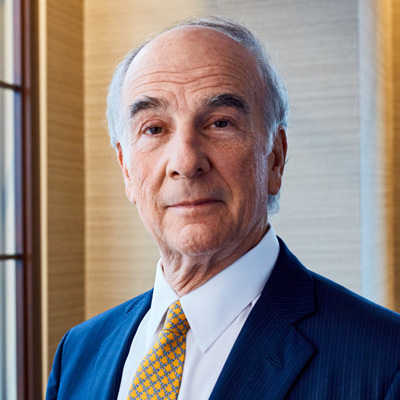
Christopher Donahue
For institutional investors, liquidity could be viewed as the least exciting part of a portfolio. Cash does not carry the return expectations of private equity, nor the complexity of hedge funds, nor the long-term growth potential of public equities.
Still, money market funds have emerged as a cornerstone of liquidity management, especially during a period of excess market volatility, elevated interest rates and uncertain monetary policy.
Few executives have seen the ebbs and flows of liquidity as much as Christopher Donahue, the long-time president, chair and CEO of asset manager Federated Hermes Inc., who discussed with CIO his thoughts on how institutional investors should be approaching their liquidity.
“I always call money market funds the eighth wonder of the world,” Donahue says, calling the investments “an absolute thing of beauty.”
The ‘No. 1 Thing’
Federated Hermes serves as one of the largest managers of money fund assets. The firm managed $912 billion in assets as of the end of the second quarter, with money market assets sitting at $677 billion—driving half of its revenue.
“Liquidity for us began 50 years ago,” Donahue says. “We were one of the first in the money funds. Institutional liquidity has been a very big part of our lifeblood. Over the last five years, we’ve gone from less than $100 billion in AUM in [institutional] liquidity to about $175 billion.”
On the importance of liquidity, Donahue says, “The … No. 1 thing that institutions want is daily liquidity at par, but they don’t ever say that. … It’s assumed that you’re getting daily liquidity at par, and that’s why the lion’s share of the money doesn’t go into, say, [exchange-traded funds that] say they’re money funds and they’re not really money funds because they don’t pay a daily dividend—some of them accumulate dividends—so it’s not daily liquidity at par.”
His view is that the value of liquidity provided by money market funds extends well beyond yield, as it gives institutions the flexibility to capitalize on various opportunities while navigating periods of market stress. Institutional investors should view liquidity as a strategic portfolio allocation, rather than an operational necessity, Donahue says.
He adds that institutional investors should be building liquidity strategies that are able to withstand multiple different market environments, rather than positioning portfolios around a narrow interest-rate outlook, which he believes is increasingly hard to predict in the era of Federal Reserve Chair Kevin Warsh.
Additionally, Donahue discussed the evolution of institutional cash management through innovations such as tokenization, which can improve settlement, collateral mobility and efficiency without changing the conservative role of the money market fund.
Cash Management Through Tokenization
Federated Hermes is one of several asset managers that have begun to offer clients tokenized money market funds. In June, the firm launched the Federated Hermes Money Market Management Digital Treasury Fund, designed to be compliant with regulations set by Congress in the 2025 GENIUS [Guiding and Establishing National Innovation for U.S. Stablecoins] Act.
Proponents of tokenization—which turns ownership of assets into a digitalized token on a blockchain—note that tokenized funds can offer increased liquidity, transparency and operational efficiency.
“When you look at the future and ask what will happen when we tokenize, things will be easier, things will be faster, it will be fine,” Donahue says, noting that there are several roadblocks to the more widespread adoption of tokenization. “However, our clients are not asking for that right now. They do not want transactions. They want us studying it, and they want to see regulation.”
According to Donahue, institutional clients first must trust that the compliance and regulation surrounding tokenization will work.
Several firms have launched tokenized money market funds as ways to test the waters of asset tokenization, several asset management executives working on tokenized products have noted to CIO, before moving on to tokenizing other asset classes. For now, several newly launched tokenized money market funds are holding $10 billion in assets as of November 2025, according to J.P. Morgan Asset Management, compared with $10 trillion in traditional money market funds.
“Suppose a new [tokenized] money fund has $100 million. We have [hundreds of billions] in money market fund assets. The clients know that with us, they are going to get daily liquidity at par,” Donahue says. “If you go into a fund that has $200 million, and [a single depositor’s assets] account for $100 million of that, you are not a happy camper, because the fund is not big enough” to provide the desired liquidity.
A representative from tokenization platform Securitize estimated the size of tokenized money market fund holdings at $16 billion, according to cryptocurrency-focused publication The Block—a twenty-fold increase from $721 million in 2024.
Still, Donahue sees value in tokenization for enhancing efficiency in money market funds, another evolution in the decades-long history of the industry.
“The whole history of money funds is the history of improving settlement, improving efficiency and enhancing collateral mobility,” he says.
Despite limited client demand for tokenized funds at the moment, Donahue notes that Federated Hermes has already found its footing in the field.
“On our call with the analysts last quarter, they asked, ‘Well, why are you working on this so hard if your clients aren’t after it?’” Donahue says. “I said, ‘Well, we’re allowed to have FOMO, too. … We’re going to get ready for the future, too.”
Anticipating Fed Moves
Donahue says it is unwise for investors to base cash management strategies on interest-rate forecasts. For money fund managers, Donahue says a 5% yield on money market fund is “nirvana,” yield with a four-handle is “terrific,” and anything beginning with three “is very good.” At those levels, returns on invested cash can roughly keep pace with inflation, while giving an institutional investor room to make decisions elsewhere.
“The way the institutions look at it, they go, ‘Hey, wait a second. If rates are dropping, then the money market fund is going to be ahead of the spot rate, because the money fund has a 45-day average [maturity on its holdings]’” Donahue says. “A lot of them come into the fund, and then sort of the same in reverse: [If] rates are rising, the spot rate is going to be higher than the money fund” for the same reason.
Cash managers can respond to rate changes by changing their portfolio’s duration or dividing assets among certificates of deposit, Treasurys, money funds and ultra-short bond products. Donahue’s larger point is that rate calls should remain secondary to the liability or transaction the cash is intended to fund.
“[Federal Reserve Chair Kevin] Warsh is in there, [knowing President Donald Trump] wants [rates] lowered, and if he can get away with what he did [at the last Federal Open Market Committee meeting], he doesn’t get yelled at,” Donahue says, adding that he does not think Warsh will raise rates in September, which is what has been forecasted by analysts.
“If you’re an institutional investor, what are you going to do?” Donahue continues. “You’ve got to make gauges as to whether you want to go long, because you think [a rate increase] isn’t going to happen, or whether you’re going to come in short, because you think it is going to happen. Or whether you just want to take it as a given and let the money market fund play the game. A lot of these companies and pension plans have very savvy individuals trying to make these calls, but don’t forget: Nobody knows. That’s why it’s a good game.”