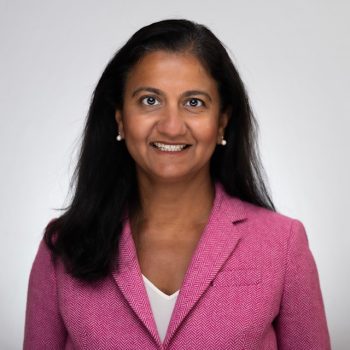

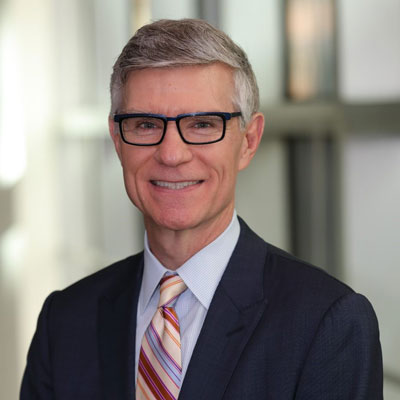
Ryan Marshall
The market for outsourced chief investment officer services has expanded well beyond the smaller institutions that initially fueled its growth. As investment portfolios have become more complex and the operational demands placed on internal teams have increased, larger asset owners are delegating investment management, portfolio construction and other investment-office functions to outside providers.
BlackRock Inc. is among the managers and consultants benefiting from this trend. The firm’s OCIO unit—housed on its multi-asset strategies and solutions platform—manages more than $360 billion in assets.
Ryan Marshall, global head of multi-asset strategies at BlackRock, has seen the evolution of the OCIO business throughout his career. As an OCIO provider, Marshall points to BlackRock’s ability to benefit from the scale of its resources and portfolio size, as well as its ability to provide specialized client service for different client types.
The OCIO industry has grown from around $1 trillion in 2015 to more than $3.3 trillion in 2024, according to data from Cerulli Associates. The firm estimates OCIO assets to grow to $5.6 trillion by the end of the decade.
“The nature of what clients are trying to solve for in the pension space is generally different than … the healthcare space and … endowment and foundation space. European pensions, which tend to be open and accruing benefits, are different than U.S. pensions. So in each case, we have client CIOs who specialize in those client types,” Marshall says. “I think that’s been a real key to some of our success over the last couple of years.”
Client specialization has become more important as the range of organizations considering outsourcing has widened. OCIO was once largely viewed as a solution for institutions that lacked the resources to build sufficiently broad internal investment teams. Today, Marshall says, larger organizations also are seeing the advantages of an external CIO, even if they already possess strong internal investment capabilities.
“This industry started as something that smaller organizations pursued because they struggled to be able to have big enough in-house teams to basically cover the full gamut of things. … [Covering] public markets and private markets, index strategies and active strategies, [the] variety of managers, that was hard to do,” Marshall says. “It was difficult to fund the cost of the technology platform that was required to do this. … But what we’re seeing is increasingly, as demands on investment teams have grown, even larger plans are embracing this phenomenon.”
“I think in some cases, chief operating officers or CFOs are waking up and saying, ‘Why do we have an in-house asset manager when we’re in a different industry—we’re an airline, a manufacturer or a healthcare organization,’” Marshall says. “In this environment, the markets are evolving very rapidly, and so the skills that one needs, and the technology one needs has to evolve, and I think organizations have found that [keeping up with the pace of change is] … a difficult task as well.”
The Future of OCIO
Corporate defined benefit pension funds have been at the forefront of the growing OCIO market. Over the past decade, the OCIO model has moved steadily upmarket as large plan sponsors have sought outside assistance with asset allocation, liability management and the protection of pension surpluses.
“We have had this size-growth phenomenon in the defined benefit pension space that 10 years ago was primarily a space for small pensions looking to outsource, and now the largest pensions in the world are looking at that,” Marshall says.
Indeed, the size of corporate pension mandates continue to grow. This year, Goldman Sachs Asset Management won a combined $70 billion in defined benefit and defined contribution assets on behalf of Verizon Communications and Lockheed Martin.
Notable mandates include UPS ($43.3 billion), Shell PLC ($70 billion) across two mandates, BAE Systems ($28.2 billion), and Eli Lilly ($25 billion).
The improved funded status of many corporate pension funds has supported the growth of outsourcing arrangements. Full funding has shifted sponsors’ focus from closing deficits to protecting surpluses and limiting downside risk.
Marshall believes the forces that pushed corporate funds toward outsourcing will increasingly affect institutions that historically maintained internal investment teams and portfolio-management capabilities.
For a growing number of institutions, an increasing level of technical skill, hardware and software to service a multi-asset portfolio is driving outsourcing. Marshall points to the cost and complexity of maintaining an internal investment office, including recruiting and retaining employees, building technology systems and keeping them updated, overseeing cybersecurity and determining how to deploy artificial intelligence effectively.
Marshall adds that BlackRock’s average OCIO pension client brings approximately $3 billion in assets, while its endowment and foundation client portfolios average around $500 million. “I think, over time, we’re going to continue to see those numbers go up, but I think we’ll see the biggest increase [from] the endowment and foundation space,” Marshall says.
Areas for Growth
Marshall says the next area for rapid growth of outsourcing will be from healthcare allocators. The healthcare client segment has grown at a 20% compounded annual rate over the last four years, Marshall notes.
Healthcare institutions can present an especially complicated set of investment challenges. Their portfolios may need to support operating requirements, capital projects, pension obligations, foundations and other pools of assets, each with its own liquidity needs and investment horizon. That creates demand for an OCIO model that can address the institution’s balance sheet more broadly than a single investment pool.
Marshall adds that BlackRock is increasingly looking to grow its book of business among endowments, foundations and family offices.
“It’s that area where we are looking to build our brand and reputation, where I think not as many of these clients know that we’re in the OCIO business for endowments, foundations, family office and healthcare—as defined benefit plans [already] know we’re in that business,” Marshall says. “That’s a big area of focus for us globally.”