

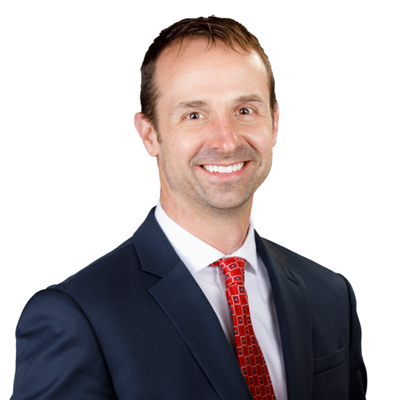
Joel Baker
Joel Baker is a senior consultant at Highland Consulting Associates with more than 24 years of investment and consulting experience, including two decades with the firm. He focuses primarily on OCIO relationships and complex client assignments, advising nonprofit and institutional clients on fiduciary governance, investment strategy, asset allocation and manager selection. Joel also contributes to Highland’s research effort, covering traditional and alternative asset classes. He is widely experienced in guiding investment committees and aligning portfolios with long-term organizational objectives. Joel holds a bachelor of business administration degree from Cleveland State University and an MBA from Baldwin Wallace University and is a CFA charterholder.
CIO: What is one principle from your career that has proven especially relevant in today’s environment, and how have you applied it recently?
Baker: A principle that has consistently defined my career—and feels more urgent today than ever—is courage. In a Stoic sense, this is the practice of distinguishing between what we can control (preparation, discipline, response) and what we cannot (market noise, geopolitical events). It is the determination to make a definitive move because the foundational data confirm it is the right path, regardless of the external “weather.”
In our industry, it is easy to get caught in “analysis paralysis,” and courage is often mistaken for recklessness. Real courage is rooted in preparation and the willingness to pivot when the governance framework or the landscape demands it, even if that means moving away from the status quo.
A recent example of courage was our resolve to take a different path—when the prevailing trend was to increase allocation to U.S. tech stocks—and find ways to reduce portfolio tracking error.
While the crowd was squeezing into a narrow set of “winners,” we saw a strategic opening in frontier and emerging markets. We chose to lean into diversification when it was most unpopular because we knew the valuation and currency gap justified the move. It was the less comfortable path, but it was the one dictated by reason and discipline, rather than sentiment and emotion.
Our focus as institutional investors must always start with governance, but we also have a responsibility to serve our clients as forward-thinking advocates. From our perspective, long-term success requires a knowledge of markets, excellent due diligence, a deep understanding of people and a willingness to be different.
CIO: How has the role of the institutional generalist consultant evolved in the past five years, particularly with respect to OCIO adoption, data/analytics, and governance—and how do you see it changing going forward?
Baker: The role of the institutional consultant has shifted from simple manager selection to becoming a critical architect of fiduciary governance. As the OCIO model gains traction, a consultant’s job is to provide the necessary checks and balance to ensure that increased delegation doesn’t lead to a loss of board control or transparency.
This oversight is vital today, as many OCIO providers are now owned by private equity firms. This shift in ownership can create misalignments in which a provider’s drive for margin might conflict with a client’s need for the best results. A truly independent perspective is required to demand the hiring of great underlying managers based solely on merit, free from the pull of cross-selling or internal affiliations.
While artificial intelligence and advanced analytics offer new capabilities, they also increase the need for human oversight. In a world moving toward automation, the consultant must use these tools to peel back the curtain, ensuring that an OCIO’s tactical moves align with the organization’s long-term goals. Looking ahead, institutional consultants will be the bridge between complex data and the ethical responsibilities of the board. As the industry leans into outsourcing, the independent sentinel becomes the most valuable asset in keeping the client’s mission the top priority.
CIO: How is AI changing the way you generate insights, provide advice or otherwise work with clients—and where do you see its greatest limitation today?
Baker: AI is fundamentally changing how we process information, acting as a powerful force multiplier that allows us to synthesize vast datasets and to stress-test assumptions with incredible speed. It has become an essential tool for generating initial insights and identifying market patterns that might otherwise stay buried.
However, its greatest limitation is the absence of productive friction. AI is designed to be efficient and agreeable, often seeking the most probable answer based on existing data. But in the world of institutional consulting, the best outcomes rarely come from the path of least resistance. They emerge from the “iron sharpening iron” of a thoughtful, informed conversation, the kind in which a board or committee pushes back, questions a premise and debates the “why” behind a move.
We cannot afford to lose the benefits of that healthy tension. While AI can provide the “what,” it lacks the nuanced judgment and lived experience required to navigate the gray areas of fiduciary responsibility. We use AI to handle the heavy lifting of data, which frees us up for the rigorous, human-to-human discussions in which real strategic breakthroughs happen. AI gives us the map, but the conversation ensures we are heading in the right direction.