
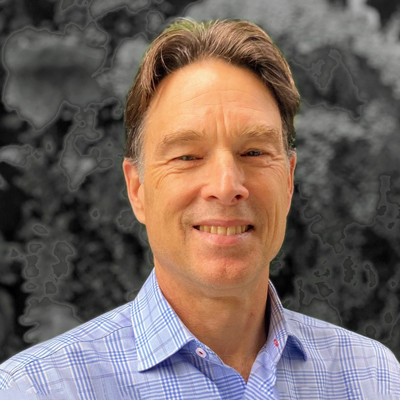
Bert Feuss
Bert Feuss is a strategic adviser with Community Capital Advisors, a boutique impact investing consultancy specializing in values-aligned investment adviser and outsourced CIO searches and place-based community investing programs. CCA serves foundations, families, nonprofits, health funders and donor-advised sponsors. Bert and the CCA team help boards and leadership teams understand impact investing best practices, articulate and embed priorities into policies and practice, and identify suitable investment partners to execute their priorities and deploy capital for mission alignment and a just and sustainable future. Bert brings more than two decades of experience as an impact practitioner, foundation executive, investment committee member and as a trusted adviser to dozens of foundations across the U.S.
CIO: Which emerging capability (e.g., AI, private market access, portfolio construction tools) will most reshape institutional investment consulting—and how are you integrating it today?
Feuss: I believe the emerging capability that will most reshape institutional consulting is not artificial intelligence alone, but the combination of AI, systemic risk analysis and stakeholder transparency that is expanding how fiduciary duty itself is defined.
For decades, consulting focused primarily on optimizing risk-adjusted returns within a portfolio. Increasingly, institutions—especially foundations, endowments, pensions and other mission-driven asset owners—are asking a broader question: How does the portfolio interact with the real-world systems that ultimately drive long-term outcomes? Climate resilience, housing, healthcare access, workforce quality and democratic stability are no longer viewed as externalities; they are investment-relevant system conditions.
AI will accelerate this shift by making complex portfolio, impact and systems-level analysis far more accessible. But the real transformation is conceptual: moving from isolated manager evaluation toward understanding interconnected risks, incentives and outcomes across entire ecosystems.
In my work, this already shows up through mission-aligned investment policy design, OCIO searches that evaluate alignment and governance—not just performance—and helping clients integrate mission-alignment goals across asset classes in a coherent institutional strategy.
The consultant of the future will need to synthesize financial analysis, systems thinking, governance and values alignment—not treat them as separate disciplines.
CIO: What is one principle from your career that has proven especially relevant in today’s environment, and how have you applied it recently?
Feuss: One principle that has become increasingly relevant in today’s environment is that investment strategy is most effective when it stays grounded in the lived realities of the people institutions ultimately exist to serve.
Too often, institutional investing operates within abstract narratives—whether about fiduciary duty, market neutrality or the supposed trade-off between mission and performance—that become disconnected from real-world outcomes. Throughout my career, I’ve found that progress often begins by challenging false binaries and helping stakeholders reconnect investment decisions to institutional purpose.
Recently, I’ve applied this in work with foundations exploring mission-aligned and place-based catalytic investment strategies. Rather than starting with ideology or technical structures, I focus on meeting trustees, investment committee members, staff and their investment partners where they are. That means creating space for concerns, clarifying misconceptions and building shared understanding incrementally.
In practice, the most durable change rarely comes from forcing consensus. It comes from helping diverse stakeholders recognize common goals—long-term financial stewardship, organizational resilience and meaningful impact—and then equipping them with the education and governance frameworks to act confidently.
In a polarized and rapidly changing environment, trust-building and proximity to end beneficiaries are strategic disciplines, not soft skills.
CIO: How has the role of the institutional generalist consultant evolved in the past five years, particularly with respect to OCIO adoption, data/analytics, and governance—and how do you see it changing going forward?
Feuss: Over the past five years, the institutional consultant’s role has evolved from recommending portfolios to helping institutions redesign how investment decisions get made. That shift has been accelerated by OCIO adoption, especially among foundations, nonprofits, pensions and other institutional investors facing constrained staff capacity, increasing portfolio complexity and growing expectations around mission alignment.
In my experience, the most important consulting work today is often governance design, rather than manager selection. Clients need help determining which decisions belong with staff, boards, investment committees or outsourced partners—and how to preserve institutional agency while benefiting from OCIO scale and expertise.
Data and analytics have also become less differentiating on their own. Most firms can produce sophisticated attribution, risk and peer analysis. The harder challenge is helping fiduciaries interpret that information in the context of mission, liquidity needs, stakeholder dynamics and organizational culture.
Going forward, I believe consultants will increasingly serve as translators and strategic partners: helping institutions align governance, investment implementation and mission outcomes in a world where technology commoditizes basic analytics but not judgment, trust or institutional nuance.