

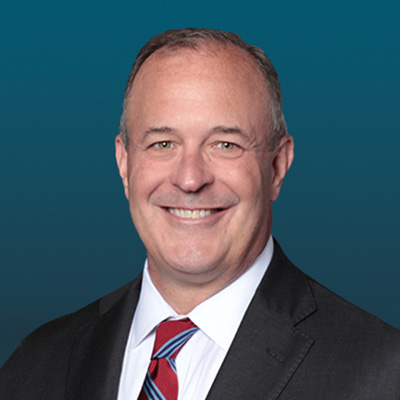
Mark Brubaker
Mark Brubaker is primarily responsible for providing strategic investment advice to help ensure clients meet their long‐term investment objectives. He also serves on the Verus management committee, OCIO investment committee and is a firm shareholder. For more than 30 years, Mark has served endowments and foundations, corporate and public pension funds, hospitals and insurance companies. He has worked closely with boards of directors, investment committees, executives and staff in developing asset allocation policy, implementing optimal portfolio structure across all asset classes, evaluating and recommending investment managers, and providing topical investment research and education.
Prior to joining Verus in 2020, Mark was the head of Wilshire’s OCIO solutions group. He was also a member of Wilshire’s board of directors, consulting investment committee and manager research oversight committee. He joined Wilshire in 1997, originally serving as an investment consultant to large institutional investors.
Prior to joining Wilshire, Mark worked at Westinghouse Electric Corp., where he was responsible for more than $9 billion in defined benefit, defined contribution and foundation assets. He also served as a managing director for PNC Asset Management, where he led the OCIO business for the large client segment.
Mark earned a bachelor of arts degree in economics from Yale University and holds an MBA from Carnegie Mellon University. Mark earned a Chartered Financial Analyst designation and is active in the CFA Society of Pittsburgh.
CIO: What changes are you making to your asset allocation advice, given the current state of geopolitics and the impact of trade tensions, inflation and rising interest rates?
BRUBAKER: Most of our clients are sticking with their long-term strategic asset allocation in the face of the challenges mentioned above. That said, with yields having risen over the past five years, we find fixed income relatively more attractive than it was when yields were hovering around zero. However, the attractiveness of Treasury yields is tempered by concerns about the growing federal debt in the U.S. and our ability to service this debt in the future. The steep rise in interest rates has also created pockets of stress and distress in the real estate market, making opportunistic real estate strategies attractive. There remains a significant capital need for more modern infrastructure to keep up with the digital economy and electrification of the grid, and this creates opportunities in value-added infrastructure. Finally, the trade tensions are making international equity investments relatively more attractive, as capital has been moving offshore and out of U.S. dollar-denominated securities in response to tariff rhetoric.
CIO: What issues do you expect to dominate financial decision making and the economy in the next 18 months to three years?
BRUBAKER: We believe that uncertainty and heightened volatility will be primary drivers of financial decisionmaking over the next 18 to 36 months. Geopolitical risk will likely continue to be a primary concern as the war in Ukraine continues and the U.S. stands on the brink of a trade war with China and other trading partners. Private markets may come under pressure as institutional investors are reducing commitments and/or initiating secondary sales—primarily in response to an overallocation due to the denominator effect, but also for many university endowments, in anticipation of the need for liquidity in the face of cuts in federal grants and the likelihood of an endowment tax.
CIO: How has institutional consulting changed in the last five years and hat do you expect to change over the coming five years?
BRUBAKER: Consolidation within the institutional consulting industry has increased over the past five years, driven by several factors, including the desire to build scale in OCIO businesses, the ability to provide access to growing channels such as the registered investment adviser and/or financial intermediary channels, enhancing research resources and capabilities (especially across alternative asset classes), and/or providing an exit for original founders. I expect these factors to continue to drive industry consolidation over the next five years, resulting in a more barbelled structure, with a number of large firms alongside smaller, independent firms. There will likely be ample opportunity for both types of firms to thrive, as different types of institutional investors seek different capabilities and firm characteristics. The firms that will succeed in the future, regardless of size, will be the ones that proactively provide thought leadership and bespoke investment advice and strategies to their clients.