

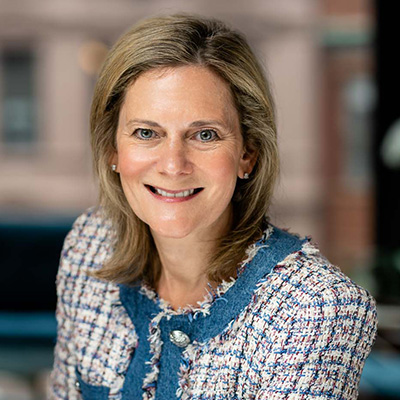
Laura Tuttle
Laura is partner and head of family offices at BFA Family Offices, overseeing strategy, investments and operations for the firm’s family offices. She also serves as general partner of the BFA Private Opportunities Fund, leading venture capital and private equity sourcing and due diligence. Previously, Laura was a managing director at Cambridge Associates in the private client group and founded Prevail, the firm’s women’s group. She holds an MBA from Cornell University and a B.A. from Boston College and is a dedicated advocate for diversity and inclusion in finance.
CIO: What changes are you making to your asset allocation advice, given the current state of geopolitics and the impact of trade tensions, inflation and rising interest rates?
TUTTLE: We are long-term investors and remain focused on building resilient, diversified portfolios. In the current environment, we are tilting selectively toward real assets and quality credit, which we believe offer durable return potential amid uncertainty. Rising geopolitical risks and persistent inflationary pressures continue to reinforce our preference for marketable inflation hedges—including commodities, TIPS and short-duration fixed income—to mitigate duration risk in a volatile rate regime.
We entered the year with a cautious stance, particularly with respect to large-cap U.S. growth equities—notably the “Magnificent Seven”—and took the opportunity to rebalance portfolios by selectively increasing international equity exposure, where valuations and cyclicality may present more attractive risk-adjusted opportunities.
At the same time, we are continuing to allocate strategically to private investments, especially private equity and venture capital, where we see structural tailwinds, differentiated deal flow and the potential for long-term alpha generation. Within PE, we are favoring lower-middle-market buyouts and sector-specialist funds with strong operational expertise and value-creation capabilities. In VC, we are focusing on early-stage managers with disciplined deployment strategies and access to next-generation technologies in AI, climate tech and biosciences. While vintage-year risk remains top of mind, we view the current valuation reset as an attractive entry point.
CIO: What actionable thing have you learned over the course of your career that has proven itself this year?
TUTTLE: I’ve been investing since the late 1990s and have lived through numerous market shocks—from the tech bubble and the global financial crisis to COVID and more recent volatility stemming from tariffs and geopolitical tensions. The most enduring lesson I’ve learned through each of these periods is not to panic—and that trying to time the market rarely works.
This lesson proved especially valuable again this year. Had we panicked and taken risk off the table during the drawdown in April, we would have missed the notable rebound that followed, with U.S. equity markets quickly recovering and returning near all-time highs. Staying disciplined, diversified and focused on long-term fundamentals continues to serve us—and our clients—well.
CIO: How has institutional consulting changed in the last five years and hat do you expect to change over the coming five years?
TUTTLE: Over the last five years, I’ve seen a growing focus on fees and efficiency, as parts of the equity and bond markets have become commoditized. The ability to generate consistent alpha through active management has declined, so we’ve shifted more portfolios toward passive strategies and emphasized tax optimization and after-tax returns.
Working exclusively with family clients, tax-optimization and thoughtful wealth transfer planning are just as important as carefully constructed portfolios and asset allocation.
Looking ahead, institutional consulting will become more technology-driven. Advanced data analytics, digital reporting and client platforms are transforming how we deliver advice. Most importantly, AI will reshape consulting by improving manager research, portfolio analysis and scenario planning. AI helps process vast data quickly, leading to smarter, faster recommendations and enabling smaller firms like ours to maintain a lean team. This lets us focus more on strategic thinking and client relationships. I strongly believe that AI will never replace the human element in our work as stewards of capital, especially when helping families navigate important life decisions.