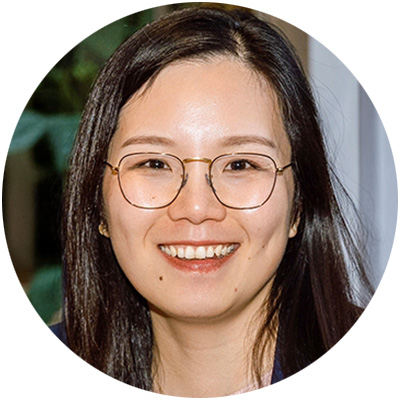

“I have had the great pleasure to partner with Cynthia for the past 10 years at two different institutions: New York University and RWJBarnabas Health. She is an expert investor and an ideal colleague. Cythia dives deep into asset classes and portfolios using her keen research and evaluation skills to construct portfolios. She is a thoughtful collaborator, a flexible teammate and a wonderful mentor.”
—Kathleen Jacobs, CIO, RWJBarnabas Health
The CHIEF INVESTMENT OFFICER Editorial Team shared a dozen questions with all our NextGen nominees and asked them each to pick six to answer. Their answers informed our decision to include them as a NextGen. Below are Cynthia do Nascimento’s answers.
CIO: What is the best way to bring more diversity to the financial industry?
Do Nascimento: It is important to make an effort to attract and hire professionals that have different backgrounds from yours and the rest of the team. It could be a different ethnical, cultural, religious or gender background, among others. There are several resources that can help with finding these candidates, including foundations or nonprofit organizations that specialize in assisting minorities in the workforce (such as the Toigo Foundation), university career centers and recruiting firms. It is also important that an inclusive culture is established at your firm, where all feel welcome to participate and have a voice, because a strong reputation will assist in attracting talent. Those professionals will bring their unique perspectives to your firm, complement the team and, as a result, create a more holistic process.
CIO: How can allocators address the growing global headwinds of demographics, geopolitical tensions, trade wars and changing supply chains?
Do Nascimento: Hold steady to your long-term portfolio. Often, there is no need to make any dramatic moves; if there was, it would indicate a problem with the long-term strategic asset allocation, and that’s a different issue. Investors that have the conviction to stick to their long-term plans are often rewarded as markets bounce back. Thus, it is critical that you keep focus on the long term instead of short-term ups and downs. Also, note: While volatile markets are difficult to navigate, these also provide opportunities. For example, such markets could provide attractive entry points to quality companies with strong management teams which tend to gain market share, increase productivity and even pass price increases in challenging times. But being disciplined does not mean complacent, and while drastic tactical changes can overwhelm the rest of your portfolio, an institutional investor should consider on-the-margin changes such as potentially adding to active management with highly skilled fundamental managers to invest in companies that can benefit from the current environment. Liquidity management is also important because it gives you optionality. Thus, a well-developed long-term portfolio that is well-diversified, has proper liquidity and is in line with your long-term investment objectives will weather difficult markets and even find interesting opportunities.
CIO: What traditional and/or alternative asset classes do you think are most important for institutional portfolios, and why?
Do Nascimento: If the main goal is to generate returns over the long term, equities is the most important asset class, because, historically, it has generated returns at a premium to other asset classes, and it is expected to continue to do so. The two main categories to achieve this goal are public equities, which are expected to provide long-term return greater than credit and have liquidity, and private equity, which is expected to generate returns greater than all other assets classes (or a premium for its illiquidity). Some protection across different market cycles can be achieved by investing in different sub-strategies that could complement each other (for example: international strategies that may outperform U.S. strategies when the latter is out of favor or a private equity fund skilled in stressed investments that may find attractive opportunities during challenging macro environments). The portfolio can also be further supplemented with other asset classes that diversify the risk and provide different benefits, from inflation protection to income generation. Thus, an equity-oriented portfolio is key to generate returns over the long term, paired strategically with other assets classes that provide diversification of return sources and different benefits.
CIO: What investing decision have you made for your organization that you’re most proud of?
Do Nascimento: Probably avoiding the large number of opportunities to invest in sky-high valuations of growth companies disconnected from underlying fundamentals and solely based on “growth at any cost” a few years ago. Instead, sticking to the investment philosophy that cash generation is vital and valuations should be supported by fundamentals, although I seemed like a contrarian that belonged to a minority school of thought during that time. But eventually this discipline rewarded the portfolio handsomely, generating outstanding returns, continuing to generate liquidity and avoiding the issues of significant de-rating, over-exposure to privates and serious lack of liquidity, issues faced by many in years to come.
CIO: Who in asset management (a person, not a firm) has most influenced your growth as an institutional asset manager?
Do Nascimento: My organization’s current chief investment officer, Kathleen Jacobs, has always been a fantastic mentor and colleague to me. I have learned from her experience of decades in institutional investing and worked alongside her as we built the team, infrastructure and portfolio across two well-established organizations. She has taught me the importance of manager selection by keeping a very high bar for those that we partner with, by requiring not only excellent performance and a strong skill set, but also alignment and exceptional integrity and good character. She manages by example and creates an environment where everyone in the team is expected to participate, all opinions are welcomed, and constructive debate is used to leverage the entire team’s perspectives, enhancing our results and reinforcing the need to work as a team in order to successfully achieve our goals. I also learned from her the power of motivation and how simple actions, such as showing appreciation for someone’s hard work, can inspire your associates.
CIO: What new skills do you think allocators or institutional investment teams need to be leaders in the field in the coming decade?
Do Nascimento: Not necessarily a new skill, but I think manager selection is a critical component of what we do in order to extract alpha in our portfolios across different asset classes. Thus, understanding a strategy investment process step by step, as well as evaluating a manager’s capabilities and skill set, organization stability, alignment, return drivers, portfolio construction and risk management competences, and developing an informed and fact-based opinion of the strategy sustainability going forward will continue to be imperative in institutional investing.