
“A key member of SWIB’s $21 billion private equity/private credit team, Kirk has deep expertise in evaluating both drawdown funds and individual company co-investments. We particularly appreciate his ability to collaborate with our managers on mutually beneficial partnerships, securing attractive terms and capacity for SWIB, while helping managers to close deals and achieve their goals. Moreover, Kirk has specialized in the highly technical health care sector. Given the breadth of his skills and willingness to take on new challenges, Kirk is continuing to build his leadership role at SWIB and in the investment community.”
—Anne-Marie Fink, private markets and funds alpha chief investment officer, State of Wisconsin Investment Board
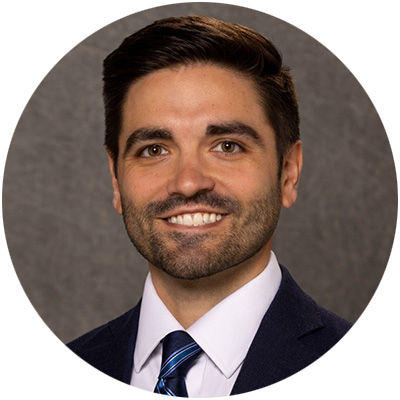
The CHIEF INVESTMENT OFFICER Editorial Team shared a dozen questions with all our NextGen nominees and asked them each to pick six to answer. Their answers informed our decision to include them as a NextGen. Below are Kirk Wolff’s answers.
CIO: How are you dealing with interest-rate risk and market volatility?
Wolff: I think the best course of action we have taken is to be patient and not make drastic reactionary changes in this dynamic environment. Risk and volatility are ever-present in markets, and we believe diversification is a prudent approach to help manage both. That said, we have spent time understanding where these two elements pose the most risk to our existing portfolio and how to address them. I believe during times like these, it is also important to focus on where potential opportunities will arise and how to position ourselves to take advantage of them. SWIB is great in that its scale and structure allow for us to act quickly when the right opportunities present themselves.
CIO: What asset classes offer the best options for avoiding or mitigating drawdown risk in an institutional portfolio?
Wolff: I do not believe it is possible to avoid downside risk, but I think we have seen the recent capital flows into private credit, infrastructure and secondaries as an indication that these strategies provide some downside mitigation. I think these asset classes are a good starting point for limiting downside, but then the hard work of underwriting the best assets or asset managers is where the rest of the downside is mitigated.
CIO: What traditional and/or alternative asset classes do you think are most important for institutional portfolios, and why?
Wolff: Equities remain a foundational piece of institutional portfolios, but private equity has gained significant ground in terms of its importance. We have seen the trends of the number of listed companies declining, many times taken private by private equity firms, and private companies choosing to stay private longer. By pairing the two strategies together with strong asset selection, one can gain exposure to a large number of the growing, profitable companies with the goal of achieving alpha generation.
CIO: What asset class or investment troubles you most right now, and why?
Wolff: Core office real estate. Structural changes in workplace behavior are colliding with high interest rates and declining occupancy. These shifts have upended demand and created uncertainty around valuations. Companies are pushing for employees to be back in the office, but there will be a portion that never go back, so that will continue to be a headwind for office investments.
CIO: What should be an investment trend, but isn’t (yet)?
Wolff: Medical education. There are a lot of investment themes around using technology to get more out of the existing labor supply, but not much in the way of increasing that supply. There are very good reasons for the length of time it takes to become a medical professional, but there have to be some inefficiencies in the system that a new approach or piece of technology could address and therefore be very profitable. Maybe it’s just wishful thinking.
CIO: What new skills do you think allocators or institutional investment teams need to be leaders in the field in the coming decade?
Wolff: Data literacy, systems thinking and interdisciplinary acumen will define leadership. Tomorrow’s allocators must be comfortable with AI, not just spreadsheets. The exponential growth of data creates more noise to sift through, so leaders must be able to leverage AI to find the signal and connect the important dots that will impact investment outcomes. Emotional IQ will grow in importance for building trust, managing teams and engaging with a broader, more complex set of stakeholders.