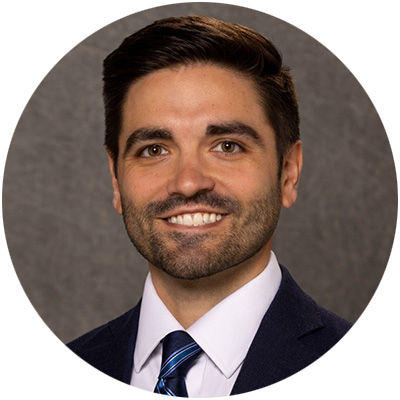

“As CIO of the plans, I have watched Shawn grow in his responsibilities, including managing the public markets and hedge fund exposure, along with overseeing the LDI portfolio. Since joining the pension team at Cox Enterprises in 2020, Shawn has brought his quantitative skill set that has been extremely beneficial in better understanding the risk-and-return dynamics of the portfolio. Additionally, his efforts in onboarding new investments and streamlining reporting processes have led to improvements in portfolio performance and stronger communication throughout the organization.
“Shawn is always challenging the status quo, and he continues to seek out new ideas for taking smart risks to drive higher alpha within the portfolio. He is currently working to expand our portfolio’s portable alpha program, which will leverage the existing hedge fund portfolio that he has helped craft over the last few years. Additionally, he was instrumental in setting up the first global equity sleeve in 2022. The global equity sleeve has helped produce a top-decile portfolio over the last year (7% above benchmark).
“Beyond his investment achievements, Shawn has taken on greater leadership responsibilities by managing a small team and leaning into their professional development. One team member is currently studying for the CAIA exam, and another was recently promoted to manager in another area of treasury when a need arose. Shawn has also broadened his relationships internally, particularly with the benefits team. He also plays a key role in developing the annual budget forecasts with the financial planning team.
“Shawn continues to build his professional network by being active in industry organizations, such as CIEBA, and serving on the Pension Derisking Advisory Board. As the pension plan enters the middle innings, I’m excited for Shawn’s trajectory and growth opportunities. He is a valuable asset to the team and has a bright future ahead!”
—Greg Spick, vice president, investments and treasury, and CIO, Cox Enterprises Inc.
The CHIEF INVESTMENT OFFICER Editorial Team shared a dozen questions with all our NextGen nominees and asked them each to pick six to answer. Their answers informed our decision to include them as a NextGen. Below are Shawn Pope’s answers.
CIO: How are you dealing with interest-rate risk and market volatility?
Pope: For pension plans with long-dated liabilities, interest rates are a central risk factor, given their inherent volatility and path-dependent nature. To manage this effectively, we model the entire liability and asset structure jointly, enabling us to simulate a wide range of scenarios and proactively plan for each. By monitoring rate levels and volatilities across the curve, we can assign real-time probabilities to various outcomes, allowing us to dynamically adjust our positioning across both physical and derivative instruments. This approach strengthens our ability to manage collateral and liquidity, reducing the risk of adverse portfolio impacts. In today’s fast-moving markets, having a clearly defined strategy is far more effective than reacting in the moment. This was reinforced by the success of our framework during the sharp rate hikes of 2022. We also believe that maintaining elevated liquidity and cash levels provides flexibility and rebalancing optionality in volatile environments. In the first half of 2025, we have been able to tactically rotate across asset classes, harvesting the opportunities presented by market volatilities.
CIO: What asset classes offer the best options for avoiding or mitigating drawdown risk in an institutional portfolio?
Pope: I still believe that Treasurys, even with the headwinds of the growing deficit and inflation concerns, will continue to be a safe haven for most tail-risk scenarios. Additionally, with positive real yields, Treasurys will earn you a decent return while hedging. Options on treasury ETFs can also be utilized to capture this risk-off dynamic. Outside the U.S., hedged 30-year German bunds [sovereign debt instruments issued by Germany's federal government to finance its expenditures, similar to U.S. Treasury bonds] offer attractive properties with a positive spread to Treasurys with less inflation concerns.
At a portfolio level, continuing to hold more liquidity can give you optionality when opportunities present themselves. While I do believe that the market charges you a premium for risk mitigation, given the current environment, there are more natural risk mitigation locations than in the past several years.
CIO: What traditional and/or alternative asset classes do you think are most important for institutional portfolios, and why?
Pope: Public equities will continue to remain a cornerstone of institutional portfolios; however, given the continued narrow breadth of index performance, I expect extension funds to grow in popularity. By relaxing the weight constraints, the portfolio manager can better express their best ideas along the market cap spectrum and take advantage of dispersion in small- and mid-cap names. Extension funds can also be implemented in a way which neutralizes the large benchmark names but still allows for meaningful risk-taking.
Credit is another asset class I believe will continue to grow and play a key role in institutional portfolios, especially given the all-in yields that can be delivered today with relatively lower levels of risk. As yields have increased, the spread between the credit and equity risk premium has narrowed, which should lead to larger credit allocations going forward.
CIO: What asset class or investment troubles you most right now, and why?
Pope: With the explosion of private credit over the last few years, I expect to see this asset class tested if we see meaningful spread widening and softer growth. One thing that we are keeping an eye on is the increasing amount and type of PIK interest as potential early warning signs. We are starting to see lower secondary pricing for private credit funds, indicating that there could be quite a bit of embedded stress within the asset class. Loan valuation transparency is also an issue with “marking to magic” concerns in these funds.
Real estate also continues to remain a challenging sector, as I do not believe we’ve seen the full extent of write-downs yet. It is a highly idiosyncratic story with some markets beginning to normalize, while others continue to struggle. In a stagflation scenario marked by high inflation and low growth, the sector would likely face continued headwinds.
CIO: What investing decision have you made for your organization that you’re most proud of?
Pope: One of the keys skills of an allocator is determining what you are good at and what you are not good at. While the truth can be humbling, it is a necessary step when designing an effective investment program. One of the tools that I developed when I started was a more rigorous and standardized view across the portfolio. This framework allowed us to better identify areas where we had demonstrated skill, such as in manager selection, timing or asset allocation, and places where a more passive approach made sense. This requires some math and a thorough understanding of all the strategies, but it allows you tease out where you should allocate your time and resources. As an example, we found that while we had selected strong managers across U.S. and international equity mandates, our allocation decisions were lacking. This led to a rethink of the portfolio and leaning into a more global framework, which has been a major driver of alpha for the portfolio in the last three years.
CIO: What new skills do you think allocators or institutional investment teams need to be leaders in the field in the coming decade?
Pope: As the pools of institutional capital have grown, I expect that the demands on this capital will grow. This will make leadership roles more complex and multifaceted, as they will be required to answer to a broader set of stakeholders. As objectives expand beyond traditional financial returns, investment acumen will be table stakes, while emotional intelligence and the capacity to lead a diverse organization will become increasingly essential. This will affect every part of the operation, from governance structures to stakeholder engagement. One way for organizations to stay ahead of this shift is to design more flexible mandates while continuing to be aligned with the evolving culture and strategic goals.