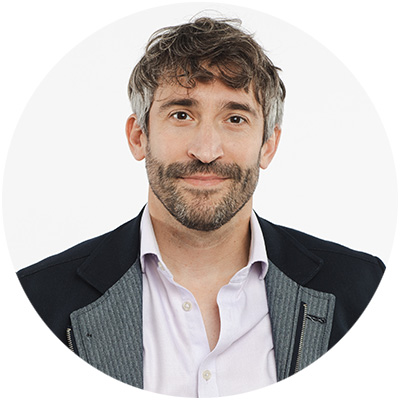

“Bradley has set a new standard for rigor in our manager analytics, codifying practices that anchor how we assess performance. Managers note his unusually deep command of quantitative strategies, placing him in the top echelon among peers investing in that space. Bradley helps turn intricate ideas into clear, actionable recommendations that elevate the team’s decisionmaking. Equally impressive, Bradley shows respect and consideration for everyone he works with, making collaboration both effective and rewarding.”
—John-Michael Consalvo, CIO, Carnegie Corporation
The CHIEF INVESTMENT OFFICER Editorial Team shared a dozen questions with all our NextGen nominees and asked them each to pick six to answer. Their answers informed our decision to include them as a NextGen. Below are Bradley Kay’s answers.
CIO: How are you dealing with interest-rate risk and market volatility?
Kay: I’m dealing with it by losing money with macro managers, though I would not particularly recommend this approach to our fellow allocators. Market volatility in itself has not been a problem for our portfolio, nor—I expect—for most investors, as we have not seen a significant and sustained equity drawdown since the global financial crisis. The biggest effect of recent market volatility for allocators has probably been the liquidity crunch from dual slowdowns of the U.S. IPO market and large private company acquisitions (anecdotally due to wide spreads between bids and asking prices). Private equity managers can generate great long-term value, but that value realization suffers when short-term volatility scares both buyers and sellers. We believe that a meaningful allocation to shorter-term, trading-oriented and relative-value strategies can complement the longer-term investors in our portfolio by profiting from elevated volatility and the many short-term dislocations it creates. The same market regime that has slowed private asset distributions has also generated stronger returns from these trading strategies (macro excluded, for now) to help us meet the organization’s funding needs while still funding new investment opportunities.
CIO: What is the best way to bring more diversity to the financial industry?
Kay: Even when the industry started thinking more seriously about diversity, I think it was very difficult to improve because so many talent pipelines were built around hiring from the banks. A hedge fund or private equity fund’s recruitment pool depended on the banks’ recruitment pool, which depended on the Ivies’ recruitment pool, and so on, with each stage adding some selection bias. I think the most critical changes, already well underway, were a wider variety of firms recruiting directly from universities and broadening their recruitment across more universities. If you want diversity of background, of ways of thinking, you are looking for people who probably did not grow up exposed to investing, who may be first generation college attendees, who may be in majors outside of finance and economics, etc. To meet them where they are, you want to build relationships at the many excellent regional schools and let their top students know this is a potential path. Next it’s a question of how to retain a diverse talent pool, maintaining a welcoming environment for people from many backgrounds, but that would take me well over the word limit.
CIO: What roles do AI and large language models play in institutional investing?
Kay: Their main role today seems to be giving us something to talk about at conferences, which should not be minimized, as we do have a lot of them. The best use I’ve found for currently available tools is speeding up the early exploration and research process—a constant need for generalists considering new strategies. More personalized tools on the near horizon will likely help us with portfolio monitoring, keeping on top of manager communications and helping flag important-looking changes with decent contextual understanding. That important productivity step probably does not require further advances in the foundation models, but likely requires considerable work on the software side to integrate those models with email and research management systems, feed in the right documents and context, and (trickiest of all) to ask the right questions.
I suspect allocators may see less impact from LLMs than most professional services. Investing is a field in which the state-of-the-art changes quickly, and best practices are trade secrets passed through apprenticeship. The knowledge that helps top managers excel is unlikely to be in LLM training data. But on the manager side, LLMs are a major leap forward in transforming unstructured data into structured data, with significant implications.
CIO: What should be an investment trend, but isn’t (yet)?
Kay: Significant passive allocations in institutional portfolios. Outperformance is rare and comes with limited capacity, certainly not enough for the trillions of dollars collectively run by professional allocators worldwide. If we really believe this, we should start with a base assumption of zero alpha (especially after fees). And I personally believe that the base case of zero alpha after costs should also apply to our team’s macro/valuation views and to private vs. public investments. This implies we should all start with a default of passive investments and only add active management with very strong evidence that the team/strategy can outperform.
This would require a lot of bravery from early adopters. I think the push to replace the typical allocators’ “medium conviction” active managers with passive investments would have to come from the trustees and institutional leadership, rather than the investment team. You cannot expect CIOs to risk career suicide by admitting the best that can be done with much of the portfolio is low-cost indexing, when so many peers claim they can fill the portfolio with outperformers (even though the industry-wide numbers suggest most of us are not).
CIO: Who in asset management (a person, not a firm) has most influenced your growth as an institutional asset manager?
Kay: Probably my colleague at Carnegie, Preet Chawla, and our former boss at both Carnegie and the Institute for Advanced Study, Mark Baumgartner. Both taught me valuable lessons about trusting yourself to take (limited) active decisions in sizing, allowing the highest-conviction managers to take an outsized share of your portfolio’s risk. I am inherently inclined toward equal risk-weighting, relying on diversification to avoid any potential mistakes costing too much. They taught me to embrace the “return” side of the risk-return trade-off, so long as our portfolio-level drawdown risk and liquidity risk remain well within bounds. The results have been positive for Carnegie so far, as our sizing decisions have added value. Check in with me in a few years, though.
CIO: What new skills do you think allocators or institutional investment teams need to be leaders in the field in the coming decade?
Kay: The informational advantages of allocators and our managers are getting smaller and smaller over time, as technology changes have made information more available and more timely for everyone. The next few years could take us to a world where commoditized tools provide good-enough discounted cash flow valuations for public and private companies, informed by LLMs ingesting management guidance and analyst research to drive the inputs. The best managers will still have an edge, but this is a world where you are a lot less likely to find some overlooked small-cap company compounding at 20% to 30% annually but trading for 10x EBITDA. In that world, I think allocators will need skill sets that let them maximize the portfolio value they get from their managers, which will likely require more leverage, more active risk management and more attention paid to the short-term volatility and flow-driven market moves that can be dangerous or opportune, depending on how you are positioned. In short, the top allocators may have jobs that start to look more like today’s business heads, COOs and risk managers at leading multi-strategy funds.