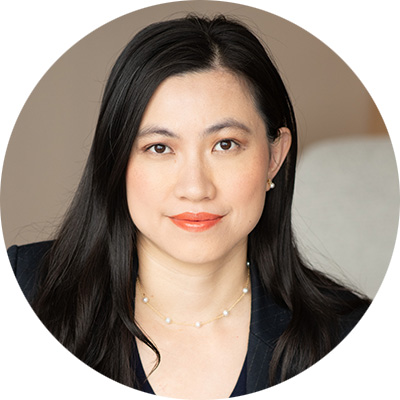

“Anna is a great candidate to be on your list for 2026. She has an incredibly strong background, both academically and in finance, having started her career at Goldman Sachs working with Jim O’Neil on the BRICS research theme. This has given her a great grounding in the sort of long-term thinking you need as an asset owner, but she combines this with interest in and awareness of the shorter-term dynamics in markets, which is so important to making good decisions. Before she joined Nest, Anna had not worked for an asset owner, so there has been a steep learning curve on the investment priorities and sensitivities of asset allocation in the context of a DC workplace pension provider who predominantly serves small businesses and low-to-moderate-income earners. My final reason for thinking she’s a great candidate for the NextGen list is she has made the Nest Investment team better—pushing the long-term-strategy team to improve its analysis, working with the manager selection team to gain insights whilst not being afraid to reach her own conclusions, and working with the heads of risk and asset allocation to help me build resilient portfolios.”
—Elizabeth Fernando, CIO, Nest Pensions
The CHIEF INVESTMENT OFFICER Editorial Team shared a dozen questions with all our NextGen nominees and asked them each to pick six to answer. Their answers informed our decision to include them as a NextGen. Below are Anna Stupnytska’s answers.
CIO: How are you dealing with market volatility?
Stupnytska: As a pension fund, our approach to market volatility is anchored in a long‑term investment horizon and Nest’s ultimate purpose: building financial peace of mind for members. Our investment strategy is therefore designed to perform over decades, allowing us to remain disciplined when markets are noisy and uncertain.
Importantly, volatility is not only a risk, but also a source of opportunity. A key part of my role is distinguishing between temporary market dislocations and genuine structural regime change. This ensures we do not overreact to short‑term shocks, while being flexible and willing to adapt when long‑term assumptions no longer hold.
To ensure that our strategy remains fit for the future, we continually assess whether our assumptions for return drivers and risk exposures remain aligned with a changing economic, technological and regulatory environment. Diversification sits at the heart of our strategy, and my team’s analysis helps determine which assets should play a role in the portfolio and how we can make our portfolio resilient under different macro and market scenarios.
All of this is supported by Nest’s robust governance framework, clear investment beliefs, a credible board and strong committee oversight, providing confidence and continuity through periods of uncertainty.
CIO: How are higher-for-longer interest rates and growing sovereign fiscal risks affecting institutional portfolios?
Stupnytska: I see higher-for-longer interest rates and rising sovereign fiscal risk as a regime shift, not a temporary market phase. They are rewriting the assumptions that shaped institutional portfolios for more than a decade.
Higher yields bring real benefits: They improve expected returns, create more attractive opportunities for the income-seeking parts of portfolios and strengthen funding positions in parts of the pension universe by reducing the value of long-dated liabilities. But they also expose leverage, liquidity and refinancing risks that were far less visible in the era of ultra-low rates.
Crucially, sovereign debt can no longer be viewed through a simplistic “risk-free” lens. As debt levels rise and fiscal credibility comes under greater scrutiny, government bond markets are becoming more sensitive to deficits, policy slippage and shifts in the investor base. Those repricing episodes now transmit faster across markets, challenging traditional assumptions about diversification and stability.
My responsibility is to ensure Nest’s strategy is built for this new regime: using diversification, liquidity planning and scenario analysis to separate healthy repricing from deeper fragility and to turn a more uncertain fiscal era into durable advantage for members.
CIO: What is the best way to bring more diversity to the financial industry?
Stupnytska: I believe the most effective way to improve diversity in the financial industry is through a holistic approach that spans access, retention and influence. For long‑term investors such as Nest, this is not only a social imperative, but also central to delivering better outcomes for members.
The first priority is widening access to the industry. Grassroots initiatives matter, but I am particularly proud that Nest has consistently partnered with programs such as the 10,000 Black Interns Programme to broaden entry routes and create opportunities for talent from a wider range of backgrounds.
Attraction must then be matched by retention. Ensuring diverse talent can thrive is just as important as hiring it. At Nest, I am a member of the disability and neurodiversity working group, which helps build a more inclusive culture through awareness, engagement and support. Recently, I hosted an event with Charlie Hart (a.k.a Ausome Charlie), who spoke powerfully about thriving professionally while being unapologetically yourself.
Finally, acting on behalf of more than 14 million members, Nest can use active ownership to encourage more inclusive practices across the market. I firmly believe that diverse organizations make better decisions and are better placed to deliver sustainable long-term value for members and society.
CIO: How can allocators insulate portfolios from growing headwinds created by wars and military conflicts, tariffs and trade shock, equity concentration risk, AI-related valuation questions and/or private market illiquidity?
Stupnytska: I believe the most effective way allocators can protect portfolios from growing headwinds is by building resilience at the strategic level, rather than reacting to every shock. Nest’s investment approach is designed to deliver for members across market cycles, political administrations and shifting macro regimes, not just in benign markets.
That starts with diversification. We do not believe long-term outcomes are improved by making concentrated bets on individual countries, sectors or short-term narratives. Instead, we build portfolios with multiple sources of return across geographies, asset classes and market types, reducing reliance on any single driver of performance.
A second pillar is scenario analysis. We use it not only to stress-test the portfolio against risks such as recession, stagflation, climate shocks and geopolitical fragmentation, but also to understand a range of plausible future outcomes and how the portfolio may behave in each. That helps us distinguish temporary dislocation from structural change and build resilience into the portfolio accordingly.
Finally, resilience depends on disciplined implementation. Market dislocations can create attractive opportunities, but only for investors with the governance, liquidity and conviction to rebalance thoughtfully. Nest’s long-term horizon and strong cashflow allow us to stay anchored to strategy while acting selectively when valuations become more attractive.
CIO: What should be an investment trend, but isn’t (yet)?
Stupnytska: I believe investing in resilience should be a much bigger investment trend than it is today. Markets are very good at rewarding growth, disruption and momentum, but much less effective at valuing the assets, systems and business models that help economies and portfolios absorb shocks and adapt to structural change.
For long-term investors, that is a major gap. Investment opportunities will continue to be shaped not only by technological progress, but also by geopolitical fragmentation, climate transition, energy security and supply-chain reconfiguration. Too often these forces are analyzed separately, when in reality, they interact and reinforce one another.
A key part of my work has been to use scenario analysis to bring those themes together into a more integrated view of future investment conditions. Increasingly, I see this not as an exploratory exercise, but as a core decisionmaking tool: helping us test assumptions, identify vulnerabilities and build resilience into portfolios before risks crystallise.
For me, the opportunity is to move resilience from being seen as defensive to being recognized as a source of long-term value. The investors who lead in the coming decade will be those who allocate capital not only to what grows fastest, but to what endures best.
CIO: What new skills do you think allocators or institutional investment teams need to be leaders in the field in the coming decade?
Stupnytska: The institutions that will lead over the next decade will be those that combine deep technical expertise with the confidence to think differently.
In my view, one of the most important skills is systems thinking: the ability to connect macroeconomics, policy, geopolitics, technology and climate, and to understand how those forces interact across the whole portfolio. Some of the key threats to pension portfolios increasingly come from shared exposures, correlation shifts and system-wide regime changes—not from isolated problems inside one asset class.
Alongside this, allocators will need much stronger data literacy and technological fluency to be able to interrogate evidence, challenge models and embrace tools such as artificial intelligence to improve investment outcomes.
But technical skill alone is not enough. In the pension industry, where the responsibility is to deliver outcomes over decades, leadership cannot mean following consensus or relying on frameworks built for the last regime. It means challenging outdated assumptions, rethinking portfolio construction and acting with conviction on a view is supported by evidence. That requires intellectual curiosity, humility and resilience.
Ultimately, leadership among institutional investors will belong to those who are willing not just to manage the future, but to question it, shape it and invest ahead of it.