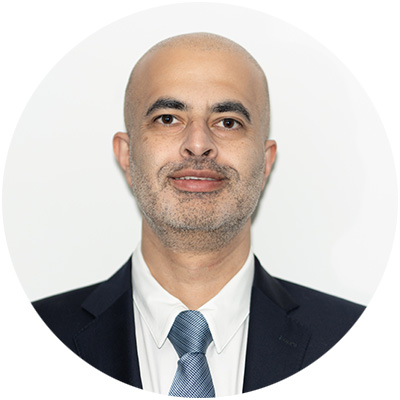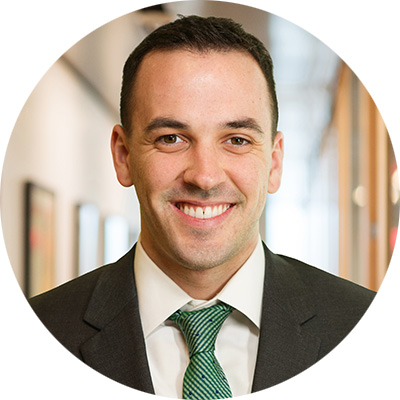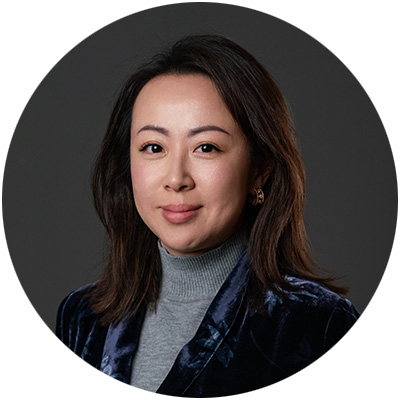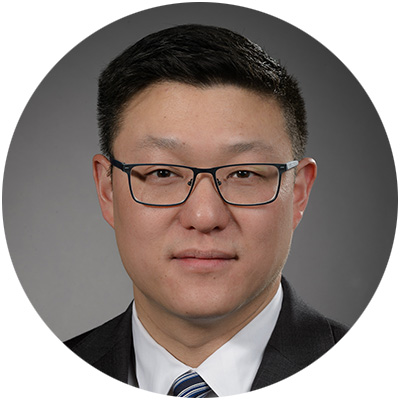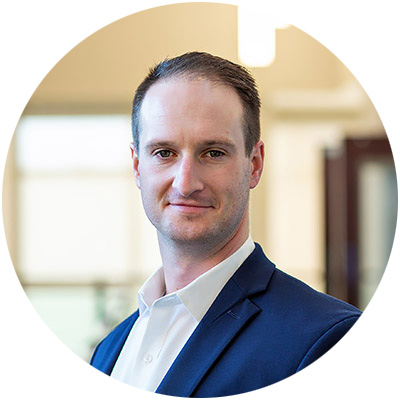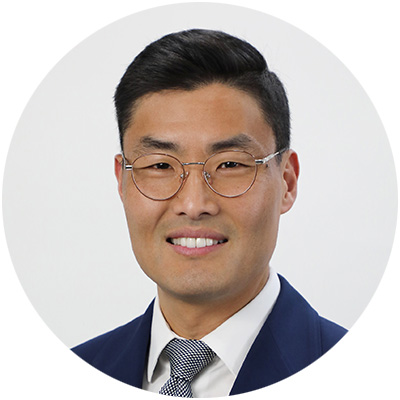
“I am honored to nominate Geoff Abrahams for recognition as a member of the 2026 NextGen class. Geoff has been a driving force behind the growth and performance of the Weinberg Foundation Investment Office’s $3.2 billion portfolio.
I have had the privilege of working closely with Geoff since 2018 and have witnessed his evolution into an exceptional investor and a highly respected leader within our organization. From the outset of his tenure, Geoff demonstrated not only strong technical ability, but also a deep commitment to the foundation’s mission. He understands that our investment portfolio exists to advance meaningful philanthropic outcomes, and he approaches his work with a strong sense of stewardship and accountability. He consistently represents the foundation with professionalism, integrity and purpose.
Geoff’s analytical rigor and sound judgment have been instrumental in shaping our investment strategy and delivering strong results across asset classes, particularly within our growth and venture capital portfolios. He has led complex underwriting processes, developed thoughtful portfolio construction frameworks, and helped refine our manager selection and monitoring practices. His ability to synthesize large amounts of information, assess risk with discipline and make clear, conviction-driven recommendations has strengthened our decisionmaking process.
Importantly, Geoff combines intellectual horsepower with humility and collaboration. He is a trusted thought partner to senior leadership and a calming force during periods of market volatility. His temperament, discipline and long-term orientation keep him grounded in all market environments. Geoff is also a culture carrier within our team. He is deeply invested in mentoring junior colleagues and is generous with his time and expertise. He provides candid, constructive feedback and actively creates opportunities for others to grow and succeed. His leadership style elevates those around him and strengthens the overall effectiveness of our team.
In addition to his investment responsibilities, Geoff has been instrumental in leading our digital transformation efforts. He spearheaded the evaluation and implementation of a new technology platform that modernized our data infrastructure and significantly improved workflow efficiency, reporting capabilities and knowledge management. This initiative required cross-functional coordination, change management and long-term strategic thinking. By successfully leading this effort, Geoff positioned the investment office to better leverage data analytics and adopt emerging AI tools that will enhance our investment processes for years to come.
Outside of the foundation, Geoff exemplifies service-oriented leadership. Inspired by his family’s experience with Parkinson’s Disease, he has devoted years to supporting families navigating similar challenges. His commitment goes well beyond volunteering. He was recently named chair of the board of the Parkinson Foundation of the National Capital Area, where he helps guide strategy, governance and programmatic impact. The organization provides critical programming and services to improve the quality of life for individuals and families affected by Parkinson’s Disease. Geoff’s compassion, dedication and hands-on leadership in this space is a testament to his character.
Geoff is a CFA charterholder and earned his MBA from John Carroll University. In 2024, he was selected for The Leadership program in Baltimore, reflecting both his professional accomplishments and his growing influence within the broader civic and business community.
Geoff possesses a rare combination of analytical excellence, operational leadership and deep personal integrity. He is intellectually curious, relentlessly prepared and unwavering in his work ethic. At the same time, he leads with humility and empathy. He is among the most talented and driven professionals I have worked with, and I am confident he will continue to shape the investment industry in meaningful ways. For all these reasons, I recommend Geoff Abrahams be included as a member of the 2026 NextGen class.”
—David Gilmore, Chief Investment Officer, The Harry and Jeanette Weinberg Foundation
The CHIEF INVESTMENT OFFICER Editorial Team shared a dozen questions with all our NextGen nominees and asked them each to pick six to answer. Their answers informed our decision to include them as a NextGen. Below are Geoffrey Abrahams’s answers.
CIO: Who in asset management (a person, not a firm) has most influenced your growth as an institutional asset manager?
Abrahams: I always say the best parts of my role are the people and that no two days are the same. I am fortunate to be in dialogue with so many folks operating across asset classes and geographies, but I learn most from the members of our small team every day, as we are in constant communication around all aspects of the portfolio. This culture that has allowed me to grow as an asset manager is no accident. It was established in the earliest days of our investment office when Jonathan Hook (Weinberg’s first CIO) and David Gilmore (the current CIO) joined Weinberg in 2014. Jon and David have been major influences for me, personally and professionally. No doubt they are great leaders and investors, but their treatment of others and empowerment of all team members has been critical to my development and is precisely what I would like to embody in years to come. Our team is also enabled by Weinberg’s board and president, who are aligned in their commitment to long-term excellence of the foundation’s asset management function. This includes the provision of resources or access to development opportunities that have been critical to my personal growth.
CIO: What new skills do you think allocators or institutional investment teams need to be leaders in the field in the coming decade?
Abrahams: External application of internally collected data points has always been a critical aspect of our roles as allocators, but incredible tech advances have changed the playing field. There are consistently lines to be drawn across individual conversations that can inform investment theses and, ultimately, decisionmaking. But until recently, it has not been practical to synthesize in seconds the sheer amount of conversations investment team members have across strategies and geographies. The ability to pull on threads (especially non-apparent threads) that connect these interactions is something that the best teams will capitalize on and benefit from in the decade to come.
CIO: How are you dealing with market volatility?
Abrahams: As an investment team seeking to grow the Weinberg Foundation’s grantmaking power to fight poverty, we must construct a portfolio that generates attractive long-term returns structured to accept volatility while affording a degree of predictability in grantmaking power each year. So in many ways, we “deal” with market volatility well in advance of its onset through a stable governance structure and thoughtful portfolio construction. In recent years, volatile periods have provided opportunities to rebalance in and out of tech-focused strategies and to add to out-of-favor sectors like energy, which has proven beneficial as inflation remains above-target, energy prices have climbed, and geopolitics remain at the forefront. More than anything, we seek to simplify the complexity inherent to volatile environments by consistently evaluating previously held views, how results across the portfolio match up with underwritten expectations and what expectations are rational to hold moving forward. We then assess their degree of alignment with any particular strategy. This final piece is key to guiding decisionmaking and is part of the process that allows us to treat volatility as an opportunity, rather a risk to be minimized.
CIO: How are higher-for-longer interest rates and growing sovereign fiscal risks affecting institutional portfolios?
Abrahams: We operate in a business of probabilities. Higher interest rates and growing sovereign fiscal imbalances increase the likelihood of volatility across both public and private risk assets, even if markets—particularly in the U.S.—have generally remained resilient. We have increasingly adopted a barbell-oriented approach to portfolio liquidity. On one side, we remain willing to embrace illiquidity within select long-duration asset classes where we believe long-term secular growth drivers can outweigh shorter-term macroeconomic pressures. On the other side of the barbell, we have increased liquidity across public equities and hedge funds to preserve flexibility, support grantmaking needs and position the portfolio to capitalize on opportunities created by evolving market regimes. More broadly, higher-for-longer rates and fiscal pressures have reinforced the importance of resilience in portfolio construction. We are increasingly focused on underwriting assumptions, liquidity management and diversification across a wider range of economic outcomes, particularly in a world where inflation, financing costs and sovereign debt dynamics are likely to remain structurally important.
CIO: What traditional and/or alternative asset classes do you think are most important for institutional portfolios, and why?
Abrahams: There is typically not a “one size fits all” approach for institutions, so having a strong understanding internally is critical to a successful external portfolio buildout. For organizations like Weinberg that have no inflows from donations or other outside sources, the public equity allocation is the foundational, liquid growth driver of the asset base. Thus, a clear process and approach to public equity, where prices fluctuate daily, is essential to long-term success. On the other end of the liquidity spectrum, venture capital (especially early stage) is another area where I feel it is critical to hold a viewpoint, even if that means less exposure to the asset class. Its high-return potential is not free from complexity. Especially in today’s AI-driven world, venture can look extremely attractive, and the world’s most valuable venture-backed companies are driving massive outcomes across investor portfolios. However, institutions must be confident in their ability to ultimately access these businesses while understanding that some of the biggest outcomes may not be realized for 10 to 15 years or more. Governance structure, strong partnerships and long-term resource allocation are vital to a successful venture program. We are fortunate to have these in place at Weinberg, but it is imperative for any institution to assess its capabilities across these areas in order to earn returns that justify the exposure.
CIO: What asset class or investment strategy troubles you most right now, and why?
Abrahams: Private credit is a clear area of concern for me, primarily from a risk/return standpoint, given its typical role in institutional portfolios. This asset class may avert major carnage relative to equity positions in portfolio companies, but complex or drawn-out recovery periods can ultimately lead to returns that do not compensate for the illiquidity, risk and opportunity cost taken on by an investment. The market is now well aware of risk related to software exposure within private credit. Underwriting standards based on recurring revenue streams that may be fundamentally challenged threaten an attractive risk/return profile that was likely already under pressure as inflows to private credit and competition amongst sponsors significantly increased over the past decade. There are certainly attractive pockets of opportunity, but we may see dispersion pick up across private credit, so it will be more important than ever to have the right partners in the space, as institutional investors and sponsors alike adjust to changing risk paradigms.