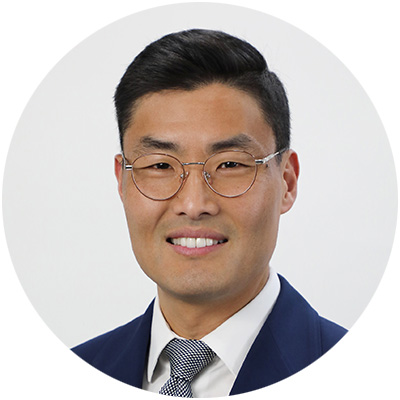
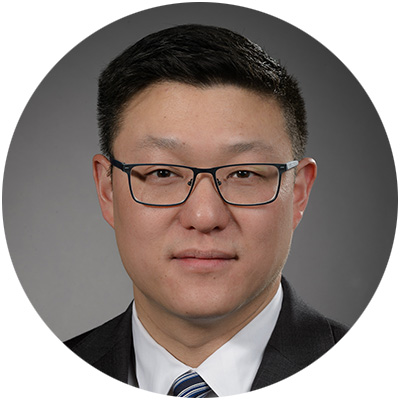
“Phil Lee is a key member of the Northwell investment office, managing a full and diverse set of investment roles. He demonstrates extraordinary initiative, good judgment and strong analytical skills, along with a professional presence with direct reports, co-workers, investment committee members, external managers, consultants and CIO peers. He basically serves as a deputy investment officer and investment group leader for Northwell.
Phil has an alert, positive, can-do spirit with a health level of professional curiosity. He applies his considerable investment experience to his role that has benefited Northwell (eight years at Northwell, nine years in investment management roles at IBM and five years as a top-ranked global debt analyst at Lehman). He earned his MBA at the University of Chicago and B.A. from Columbia University.
Since joining Northwell in 2018, Phil has managed several new initiatives, including building out the private equity and private real estate portfolios—including direct and co-investments—identifying and researching new investment strategies (e.g. insurance linked, infrastructure, digital/blockchain), and producing a monthly comprehensive investment newsletter. Phil also leads weekly team meetings and has mentored several interns over the years.”
—Michael Odlum, senior vice president, Northwell Health
The CHIEF INVESTMENT OFFICER Editorial Team shared a dozen questions with all our NextGen nominees and asked them each to pick six to answer. Their answers informed our decision to include them as a NextGen. Below are Philip J. Lee’s answers.
CIO: How are higher-for-longer interest rates and growing sovereign fiscal risks affecting institutional portfolios?
Lee: When rates first increased, although there were negative returns due to higher rates, allocators were in part comforted by higher long-term expected returns. Alongside higher rates and expected returns, allocations to fixed income also increased. Unfortunately, over the past five years, there has been one reason after another to stoke inflation fears—COVID money, tariffs, higher tax refunds and, now, commodity price shocks. Although longer-term inflation expectations appear anchored, the level of prices and total debt are causing some segments of the population to struggle. On the portfolio side, higher inflation and inflation volatility have dislocated what was once a much more reliable negative correlation between stocks and bonds. Longer term, while we have confidence in the U.S.’s ability as a nation to innovate and encourage entrepreneurship (especially with the lead in AI), fiscal discipline must be maintained for long-term sustainability.
CIO: What is the best way to bring more diversity to the financial industry?
Lee: This is a great question. Often diversity gets talked about with regard to gender, race, orientation and so forth. While I would agree these elements are important, I think there are more categories. For investment programs to be successful, diversity of thought processes, intellectual backgrounds, culture and representation should all be considered. A classic example comes from one of our best managers. They look for folks who have been excellent in other settings (such as musicians, engineers and athletes) and train them as investors. Perhaps a less obvious example comes from neurodiversity. Neurodiverse individuals often come at problems from different angles, consider alternate solutions and can produce creative solutions that others have not considered. The recruitment model for such neurodiverse talent is challenging because no individual is the same, but if we look hard enough, I believe there are pockets of brilliance available.
CIO: How are you using AI and large language models in your organization’s investment operation?
Lee: We have been using and testing AI in standard and less standard ways. Thus far, we have found the standard efficiencies in document reviews, summarizing extensive regulatory documents and so forth. We have come across limitations with the hallucination of answers and an inability to accurately ingest visual elements where measurement accuracy is key—particularly comparative charts and graphs. In looking forward, I believe the launch of Excel-based AI tools that can access publicly available information will, and maybe already has, bring a market analyst into a new age. What an analyst could previously only accomplish over multiple days can now be automated, allowing that individual to generate both higher volumes of output and greater value-added analysis. At our investment offices, we are using AI to build mirror active strategies in equities, fixed income and hedge funds.
CIO: Do you view country-by-country regulatory fragmentation around ESG an opportunity for your portfolio, or a risk?
Lee: Differing rules and regulations imposed by any number of national, state and local groups bring a lot of complexity to portfolio management. With that complexity, though, comes opportunity. It can be frustrating when seeking the common good because part of the issue is that there isn’t clear agreement about what and which good should be prioritized. In the long run, if there are goals worth achieving and risks worth taking (and of course there are), then, clearly, common regulation and definitions would be helpful. That said, in the interim for investors, just as countries find themselves better off when playing to their comparative advantages, so too can investors find opportunities due to the patchwork of varying ESG regulations from one place to another.
CIO: Who in asset management (a person, not a firm) has most influenced your growth as an institutional asset manager?
Lee: The entity that has most influenced my growth is the Northwell Investment Committee. At Northwell, we have arguably the most sophisticated investment committee of any institutional asset owner. Our committee includes or recently included current and formers CEOs of investment banks and asset management firms; the creator of mortgage-backed securities; founders of private equity, private real estate and private credit firms; the co-head of fixed income at a major global asset manager; the head of U.S. equity strategy at a leading bank; and a sitting Federal Reserve Bank president. These investment experts not only provide valuable insights on markets and asset classes, but even more importantly, they are dedicated to supporting the nonprofit mission of Northwell Health, “To improve the health and quality of life for the people and communities we serve by providing world-class service and patient-centered care.” Working alongside and learning from these folks, along with my boss, Mike Odlum, has been invaluable to me. While other asset owners may prefer to operate as independent experts, we prefer embracing the complexity of diverse expert thoughts because we believe they create alpha.
CIO: What new skills do you think allocators or institutional investment teams need to be leaders in the field in the coming decade?
Lee: The core ability for an investor to perform in-depth fundamental and advanced quantitative analysis will remain important going forward, even with AI helping investors become more efficient and sophisticated. Independent research and the ability to pick apart a recommendation to determine what truly matters has been, and always will be, a key differentiator of performance and an indicator of investment acumen. Conversely, the herding risk that allocators face from the use of similar frameworks may become worse with AI. Folks that lack differentiated analytical backgrounds risk being generic in evaluations of managers and co-investments, producing average to poor results. The key differentiator is always depth of knowledge and understanding, which, again, is why Northwell’s investment committee holds an advantage like none other.