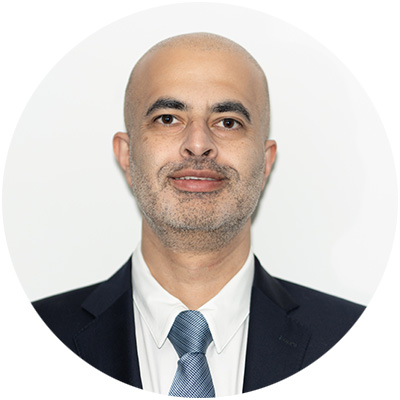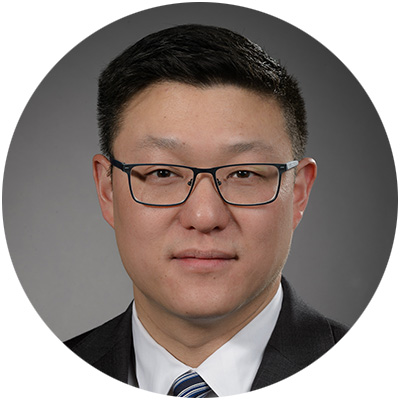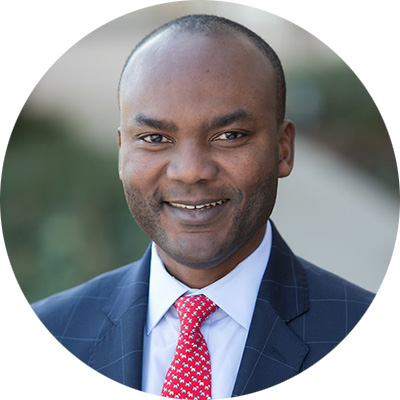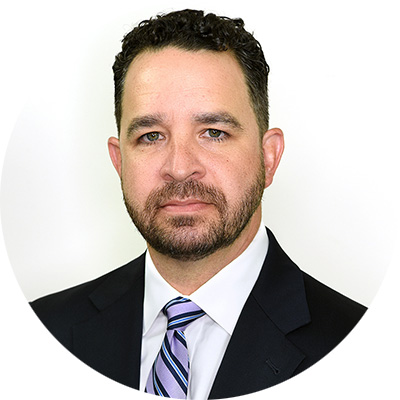

“Michael Lowery is a valuable member of the Illinois Municipal Retirement Fund’s Investment Department. Michael demonstrates leadership skills, strategy and vision—the knowledge and proficiencies required for a next generation CIO. He uses good judgment when making decisions and produces quality work. He can be trusted to consistently meet deadlines and keep pace with the demands of his role. He takes the initiative to identify process improvements and solutions to challenges. He has the ability to execute on vision and transition ideas to action. Michael supports the mission, vision and values of IMRF and the Investment Department. He acts in a professional manner and adheres to IMRF’s policies and procedures. He is self-disciplined and takes responsibility, accountability and ownership to resolve problems. Michael continues to be self-motivated and is driven to succeed and perform well. He’s dependable and makes suggestions without prompting. He consistently provides solutions and ideas to improve the portfolio.
Michael is a CFA, CMT and CAIA charterholder, and he has completed the CFA Institute’s Sustainable Investing Certificate. He also led the IMRF initiative to become a signatory of the CFA Institute’s Inclusion Code, including ongoing framework reporting. He not only has the knowledge, but also the emotional intelligence to lead a team of investment professionals.
In his current role as an equity portfolio manager, he contributes daily as a critical member of the internally managed portfolio team. He effectively manages the $7.8 billion internally managed portfolios, which include a large-cap factor-diversified strategy, a large-cap quantitative strategy and a small-cap quantitative strategy.
Michael continues to identify opportunities for leadership development. He is always willing to step up and take on additional responsibilities. He goes above and beyond by periodically offering asset allocation solutions when the portfolios demonstrate the need.
As part of the IMRF 2023-2025 Strategic Plan, the internally managed portfolios team launched a due diligence questionnaire for a quantitative research platform and began an evaluation and documentation process on the respondents. Michael’s input on contract negotiations and initial implementation was critical to the successful execution and completion of the contract. The research platform will be instrumental in the internal model development for application to risk-adjusted portfolio construction for the internally managed portfolios.
As part of the IMRF 2026-2028 Strategic Plan for the Investment Department, Michael worked with the CIO to prepare strategic plan concepts, including fund rebalancing, structure reviews, fee negotiation, internalization of equity trading and internal management peer outreach.
Michael continues to identify methods to distinguish IMRF’s internally managed program as a top-performing program and thought leader in the industry. Michael continues to increase his knowledge and improve his investment acumen and demonstrates thought leadership through investment industry events and outreach.
Michael continues to show leadership and mentoring ability through independent work, team-based work, collaboration with department staff, and knowledge-sharing with all colleagues at IMRF while exhibiting high ethical behavior and IMRF values. I wholeheartedly support Michael Lowery for the 2026 Next Generation CIO recognition because he exhibits all the characteristics needed to be a strong and talented leader and a maker of future leaders.”
—Angela Miller-May, CIO, Illinois Municipal Retirement Fund
The CHIEF INVESTMENT OFFICER Editorial Team shared a dozen questions with all our NextGen nominees and asked them each to pick six to answer. Their answers informed our decision to include them as a NextGen. Below are Michael J. Lowery’s answers.
CIO: How are you dealing with market volatility?
Lowery: Market volatility is impactful for all investors, and IMRF is no exception. The market has experienced—and will continue to experience—periods of elevated volatility driven by macroeconomic and geopolitical risks that at times create exogenous shocks in the market. However, at IMRF, we manage volatility by remaining focused on our long-term strategic orientation through the fund’s asset allocation policy. We also remain committed to our mandate to meet our obligations by satisfying benefit payments to our beneficiaries.
Meeting this objective requires a prudent investment approach that meets the actuarial assumed rate of return over the long term while maintaining adequate liquidity through disciplined rebalance activity. Recent incremental changes to IMRF’s strategic asset allocation policy included lowering equities toward fixed income, an increase in real assets through private infrastructure, and a slight modification to the private credit target. These decisions are meant to better position the fund for success while maintaining confidence in our investment approach within these asset classes. Risk management and income generation were drivers of the decisions and are consistent with the strategic policy. The organization remains committed to its mission and its investment framework that retains flexibility to react to opportunities while focused on the long-term objective.
CIO: What is the best way to bring more diversity to the financial industry?
Lowery: The most effective approach, in my experience, is to be intentional about the goal, which is achieved through the incorporation of a robust, repeatable process with a focus set on the long-term outcome. Diversity comes in many forms, such as thought, experience, ethnicity, race, age and gender. Therefore, whatever the diversity goal, strive to be intentional about how it is achieved. It is great to see this process firsthand at IMRF, a leader in this area, as the organization has consistently exceeded its legislatively mandated investment manager and brokerage diversity goals. IMRF also has the privilege of being led by Chief Investment Officer Angela Miller-May, a passionate diversity advocate and leader in the financial industry. Beyond process, it is important to partner with mission-aligned organizations. For example, I helped lead the organization’s effort to become a signatory to the CFA Institute’s Inclusion Code. Through this initiative, best practices are identified and alignment is established with external partners.
CIO: How are you using AI and large language models in your organization’s investment operation?
Lowery: The short answer is that my organization is not currently using artificial intelligence and large language models within the investment operation. However, we are closely monitoring both the potential benefits and associated risks of these tools. As a public pension fund, it is most prudent to carefully evaluate innovations, such as AI and LLMs, before implementation. This approach creates a lagged effect, as early adopters may find certain efficiencies; however, caution is key for asset allocators.
The risks of data privacy, data integrity and governance are central to the concern for the fund’s stakeholders. The potential rests in new operational efficiencies of completing routine tasks such as composing meeting notes and reviewing structured and unstructured data, as well as more complex tasks involving risk management and investment decisionmaking, such as strategic asset allocation analysis, manager research, pacing analysis and liquidity forecasting. In the meantime, the tool kit remains robust for the primary functions of asset allocation and manager selection.
In parallel, beginning the work to identify the problems that require solutions and building a framework within the organization to move towards integrating innovative solutions, such as AI and LLMs, is the proactive path forward. I think that asset owners who approach this topic with a strategy of incorporating big-picture, lasting solutions through rigorous due diligence will win the long game.
CIO: What traditional and/or alternative asset classes do you think are most important for institutional portfolios, and why?
Lowery: The most important asset class, by definition, is the one that has the greatest return-and-risk impact on investment results. My experience as an asset allocator instilled an appreciation for the variety of asset classes available to make investments, in service of diversification. Therefore, instead of selecting a “most important” asset class for institutional portfolios, I think the focus should reside on investments being well understood prior to making the investment decision and throughout the holding period.
When we have a strategic target toward an asset class, there remains confidence in the investment for the long term, and the investment team seeks to create efficient portfolios through a mix of internally managed strategies and a selection of high-quality external investment managers across public and private markets. Essential investment considerations, evaluated on a stand-alone basis and in the context of the fund’s objectives, include items such as forward risk and return expectations, investment time horizon and liquidity profile. Recent market conditions have illustrated how these important factors can impact portfolios, with public equity markets experiencing rising concentration and elevated valuations, and private markets facing extended investment periods and lower-than-expected investment distributions. Consequently, having a deep understanding of the particulars of each investment and how the attributes of each asset class will impact the fund is key as portfolio construction takes shape.
CIO: Who in asset management (a person, not a firm) has most influenced your growth as an institutional asset manager?
Lowery: My answer might be surprising, as it is someone who I have never met. Gary Brinson was the founder of Brinson Partners in Chicago, which was sold to Swiss Bank Corp. and subsequently merged with UBS in 1998. I was fortunate to have worked at UBS for 10 years early in my career, where I was able to learn from numerous Brinson Partners alumni. There was a high level of investment knowledge and integrity associated with the predecessor organization and the individuals employed at the firm. The knowledge I gained from those colleagues was instrumental, as the experience laid the foundation for my investment career. In addition, Brinson’s seminal research centered on asset allocation has been impactful to me, as it has been to all asset allocators since its publication. Therefore, despite not having the pleasure of meeting Gary Brinson, I would point to him and the people who embraced his firm’s culture as having the most influence on my growth as an institutional investor. Finally, I would add that growth as an institutional asset manager is not solely based on one’s experience at a prestigious firm, exposure to a particular investor or a degree from a specific school. I would contend that an individual’s character, judgment and respect for others are equally as important to growth as an investor. For that, I would thank and recognize my parents for having the most influence on me by instilling those values from an early age and my wife for supporting my professional endeavors.
CIO: What new skills do you think allocators or institutional investment teams need to be leaders in the field in the coming decade?
Lowery: The skills allocators and investment teams need to be leaders in the coming decade will be a flexible mindset, sound decisionmaking and judicious implementation of technology. Allocators and investment teams should seek to hire individuals with the ability to think independently, work collaboratively and change their minds when challenged with new information or compelling viewpoints. It often feels that we, as investors, are inundated with data and new technology. However, the bridge to interpret information from these new, efficient tools and make rational decisions remains the true value proposition.
The adoption of artificial intelligence is reshaping the financial industry as a disruptive innovation. Based on the unprecedented scale of investment being made in new technology, it is fair to say AI will be of critical importance moving forward. Therefore, whether someone is a new graduate or a seasoned investor, it is important to cautiously, yet methodically, identify how new technology can improve the investment process. In addition to new technology, I think it is important for investors to be knowledgeable about market structure changes, such as tokenized assets and continuous trading, and how they may also reshape the financial industry. These changes might result in transparency and liquidity shifts across public and private markets that are yet to be widely appreciated. Embracing new technology paired with the collaboration of an investment team armed with the aforementioned skill set will position organizations to be leaders in the field and achieve top-tier results.