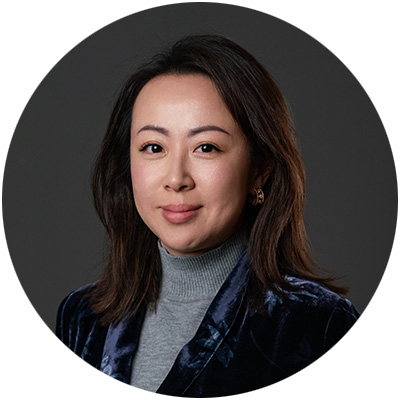
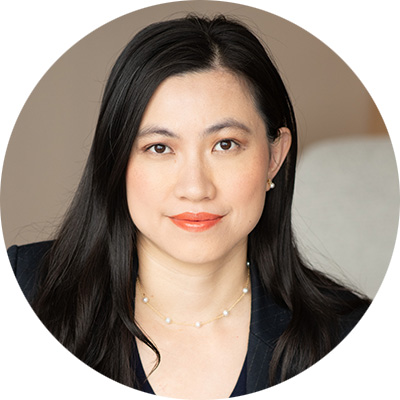
“Joyce Zhang is among the most energetic, intellectually curious, authentic and generous investment professionals I have had the privilege of working alongside. Joyce’s relentless pursuit of the best managers across asset classes has meaningfully expanded our opportunity set and raised the quality bar across the portfolio. She is a Kauffman Fellow, a credential that reflects not only her standing in the investment community, but her commitment to continuous learning at the frontier of innovation, a commitment she brings to work every single day.
What distinguishes Joyce beyond her energy is the quality of judgment underneath it. She identified managers with structural advantages that may not fit neatly in traditional asset class buckets. She has also shown courage in making contrarian allocations to international venture managers which has yielded several IPO exits in less than four years, a striking early validation of a thesis she pursued when others were not. At the same time, Joyce is a holistic thinker who evaluates opportunities not in isolation, but through the lens of the full portfolio. She carries institutional memory with unusual intentionality, regularly surfacing lessons from past decisions and holding the team accountable to them in a way that is collegial, rather than corrective. The combination of forward-looking conviction paired with backward-looking discipline is rare in this industry.
Joyce is equally remarkable for what she gives. She shares insights, research and experience with a generosity that lifts the entire team and industry peers, and her instinct is always to build others up, rather than to hoard an edge. The investment world benefits when people like Joyce are at the table and recognized for it. I endorse her nomination without reservation.”
—Sophia Tsai, CIO, Wallace Foundation
The CHIEF INVESTMENT OFFICER Editorial Team shared a dozen questions with all our NextGen nominees and asked them each to pick six to answer. Their answers informed our decision to include them as a NextGen. Below are Joyce Zhang’s answers.
CIO: How are you dealing with market volatility?
Zhang: A good crisis playbook is the foundation for taking risks. Once you understand the worst-case scenario and have built layers of liquidity sources and instruments, you can play offense. Volatility is not the enemy; being unprepared for it is. When others are paralyzed by uncertainty, a well-prepared investor can move decisively and capture opportunities that only emerge in dislocated markets.
CIO: What is the best way to bring more diversity to the financial industry?
Zhang: By hiring unconventional candidates. When I was hired by Wallace, I had no U.S. work experience. I had built a strong career in China as a fixed-income trader, but I was deeply uncertain whether I could find a role in the U.S., since my English was imperfect and my allocator network was virtually nonexistent. Former CIO Rob Nagel took a chance on me anyway. Sometimes giving an opportunity to a non-obvious candidate yields a pleasant surprise to the upside. I firmly believe that underrepresented groups deserve that chance, and I am committed to paying it forward.
CIO: What asset class or investment strategy troubles you most right now, and why?
Zhang: Venture capital. As a Kauffman Fellow with many close friends in the ecosystem, I genuinely want to support it, but I also believe VC is a unique asset class that is not right for every investor. Only top-quartile managers generate exceptional returns, and not every LP can access those managers. The recent AI wave has compounded my concern: While it has undeniably produced real, transformative companies, it has also fueled massive valuation rounds and a troubling herd mentality. Capital is chasing narratives, rather than fundamentals, and that rarely ends well for the broader LP community.
CIO: What investing decision have you made for your organization that you’re most proud of?
Zhang: Investing in Chinese venture capital and long-only managers in 2022, when almost no one else wanted exposure to China. The massive capital dislocation created extraordinary opportunities: Our managers gained access to top entrepreneurs building AI companies at compelling valuations. Many of those companies have since IPO’d or achieved significant markups, and the funds have returned more than three times in just three years. None of it would have happened without the conviction of my former CIO, Tom Lenehan, who gave me the confidence to stand behind my thesis and lean in during a period of maximum uncertainty.
CIO: Who in asset management (a person, not a firm) has most influenced your growth as an institutional asset manager?
Zhang: Many people have shaped who I am today, including Tom Lenehan and Anthony Thai at Cornell, Patrick Sherwood at Grove Street, Sophia Tsai (my longtime friend and current boss), and my counterpart Signe Conway. But the person I think of most is Brian O’Neil, retired CIO of the Robert Wood Johnson Foundation, who stepped in as our interim CIO. Brian is the rare leader who combines long-tenured wisdom, strategic clarity and genuine kindness. By the end of his term, our team presented him with a jacket engraved “GOAT CIO,” and he well deserved it. His example set the standard I still aspire to.
CIO: What new skills do you think allocators or institutional investment teams need to be leaders in the field in the coming decade?
Zhang: Brian O’Neil once told me that being a great chief investment officer also means being a great chief information officer. That insight has never been more relevant. Technology—and AI in particular—has brought extraordinary efficiency gains to investment work. The allocators who will lead in the next decade are those who know how to harness these tools to make faster, better-informed decisions, without losing the judgment and conviction that no algorithm can replace.