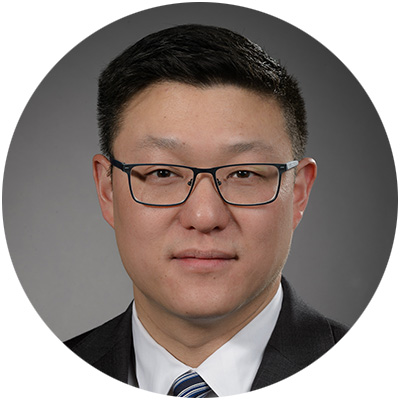
“I heartily endorse Steve Yoon’s nomination for CIO’s 2026 NextGen class. Steve took on an enormous challenge and opportunity when he joined IPOPIF in 2021 as employee No. 3 to build a new pension investment fund from the ground up.
Steve played a valuable leadership role in developing and conducting the initial selection of custodian, transition managers and index managers. He was then instrumental in the asset transfer and assimilation of more than 300 participating police pension funds. His knowledge, experience, problem-solving and communication skills were key factors fostering the trust and confidence of our partners.
Following the initial asset aggregation, Steve led a series of robust active manager searches resulting in high-conviction manager allocations to bank loans, emerging market debt, high-yield debt and private credit. His search process management, organization, leadership and creativity cast a wide net and encouraged participation of top-caliber managers.
As we continue to add investment complexity and alpha, Steve has been a valuable contributor to the development of the private market investment strategic plan and the resultant searches in private equity, infrastructure, real estate and private credit.”
—Kent Custer, CIO, Illinois Police Officers’ Pension Investment Fund
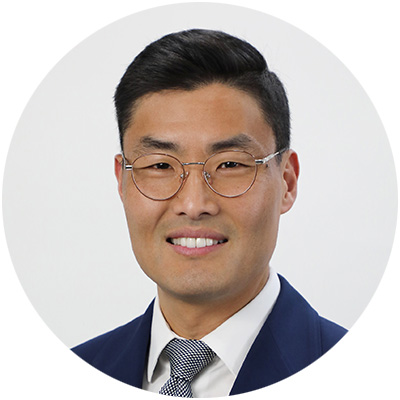
The CHIEF INVESTMENT OFFICER Editorial Team shared a dozen questions with all our NextGen nominees and asked them each to pick six to answer. Their answers informed our decision to include them as a NextGen. Below are Steve Yoon’s answers.
CIO: What is the best way to bring more diversity to the financial industry?
Yoon: The financial industry has built a strong foundation for diversity, from dedicated diversity officers to representative leadership across the board. In addition, there are several industry trade groups that advocate diversity in financial services.
However, to really move the needle, I think two things need to happen: First, we must incorporate financial literacy and investing concepts into educational curriculum at an early age. Many minority households lack exposure to the financial industry, which often results in youth only aspiring to traditional paths, such as medicine or law. By introducing financial career options at a young age, they’ll see a whole new set of career paths they didn’t even know existed. Second, organizations need to be intentional, whether they are recruiting for a vacant role or selecting managers for an asset allocation. Having intentionality to be deliberate in recruitment or manager selection forces people to look at the candidate pool differently, which is usually how you find great talent and unique strengths that everyone else is overlooking.
CIO: What investing decision have you made for your organization that you’re most proud of?
Yoon: My journey with the Illinois Police Officers’ Pension Investment Fund has been a unique, once-in-a-lifetime opportunity to serve as the architect for a major public pension investment fund. Serving as a founding member of the team alongside the board of trustees, executive director and chief investment officer, I have had the privilege to steward the consolidation of 357 suburban and downstate police pension plans into a single, unitized fund.
I am most proud of transforming an unformed legislative mandate into a high-functioning institution. This involved building our infrastructure from the ground up and successfully transitioning the consolidated assets into a best-in-class, long-term institutional portfolio. Everything we have done at IPOPIF has been deeply impactful because it directly secures the retirement futures of thousands of first responders and their beneficiaries from across the state of Illinois.
Ultimately, I am proudest of the fact that we have delivered a more efficient, scalable and resilient investment model that will serve Illinois police officers and their families for decades to come.
CIO: Who in asset management (a person, not a firm) has most influenced your growth as an institutional asset manager?
Yoon: There are two individuals.
Jim Mohler, executive director of the Metropolitan Water Reclamation District Retirement Fund, was pivotal in instilling my foundational knowledge of public pension investments. More importantly, he taught me the true weight of being a fiduciary, emphasizing our responsibility to the members who rely on these funds.
Working with Kent Custer, chief investment officer at the Illinois Police Officers’ Pension Investment Fund, has been a masterclass in professional rigor. He taught me how to think like a sophisticated institutional investor, prioritizing strategic discipline and a high standard of professionalism in every decision we make.
CIO: What traditional and/or alternative asset classes do you think are most important for institutional portfolios, and why?
Yoon: Instead of focusing on traditional or alternative labels, we categorize our assets based on their specific functional objectives, such as growth or income. By viewing the portfolio holistically, rather than piece-by-piece, we ensure every investment serves a defined role. I consider growth and risk mitigation to be the two most critical “asset classes” in this framework.
The growth objective—encompassing all public and private equities—is designed to capture upside and exceed our actuarial return targets. Conversely, risk mitigation—composed of cash and traditional fixed income—provides the diversification and downside protection necessary to weather market selloffs. Ultimately, a CIO’s priority should be to align the portfolio with these overarching strategic goals, rather than getting lost in individual asset classifications.
CIO: How can allocators insulate portfolios from growing headwinds created by wars and military conflicts, tariffs and trade shock, equity concentration risk, AI-related valuation questions and/or private market illiquidity?
Yoon: As an institutional investor, trying to time the market or using tactical allocation to navigate macroeconomic headwinds is extremely challenging and can be risky. Instead, I focus on the following three key pillars: long-term strategic asset allocation, disciplined rebalancing and broad diversification.
To execute this, we maintain a rigorous qualitative and quantitative understanding of our managers, using periodic conviction reviews to ensure alignment. If a manager drifts from their stated philosophy, we have clear protocols in place to step in and remediate.
CIO: What should be an investment trend, but isn’t (yet)?
Yoon: I think the trend to watch is private credit secondaries. What’s happening in private credit right now is fascinating: the sheer volume of dry powder, forced asset sales from BDCs and liquidity needs for some LPs. Building or having an established platform specifically to provide liquidity in the private credit space is incredibly timely. There is a massive opportunity to pick up high-quality assets at a discount as the market matures and as LPs look for exits.