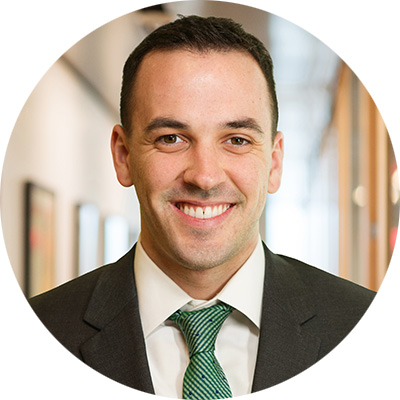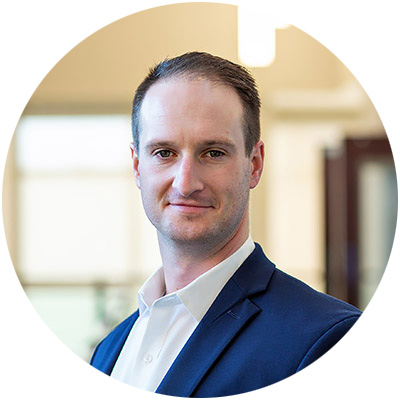
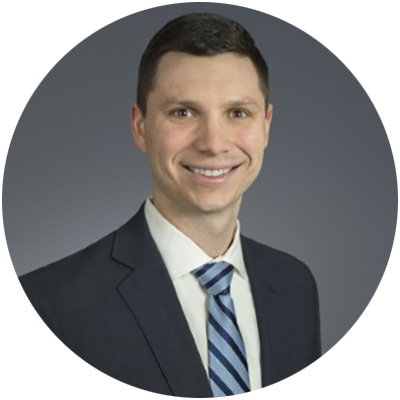
“Craig Wocl is the deputy chief investment officer at International Paper. He stands out as a NexGen leader because he consistently pairs strategic vision with the ability to execute complex, high-stakes initiatives. His leadership during the restructuring of International Paper’s savings plan demonstrates this blend of foresight and operational excellence.
Recognizing the need for a more modern, participant-aligned investment lineup, Craig helped champion the transition from balanced funds to target-date funds—an evolution that required not only technical expertise, but also the ability to build consensus across stakeholders, navigate complexity, and communicate change with clarity and confidence. The result was a more intuitive, future-ready plan design that strengthened participant outcomes and aligned the organization with industry best practices.
Craig’s impact extends well beyond the savings plan. Craig has become a trusted leader at International Paper. During periods of organizational transformation, especially in the context of spin-offs and divestitures, Craig has stepped up. These projects demand precision, cross-functional coordination and the ability to communicate clearly to a variety of stakeholders. Craig has repeatedly delivered on all three. Whether guiding investment lineup transitions, ensuring continuity for plan participants or orchestrating the separation of complex retirement plan structures, he brings a steady hand and a solution-oriented mindset that elevates the entire team.
What distinguishes Craig even further is his ability to lead with both technical mastery and human insight. He communicates with clarity, adapts his message to diverse audiences and attempts to create an environment in which colleagues feel informed, supported and empowered. His work reflects not only deep expertise, but also a commitment to continuous improvement—qualities that define the next generation of industry leaders.”
—Carol Tusch, vice president of trusts and investments, International Paper
The CHIEF INVESTMENT OFFICER Editorial Team shared a dozen questions with all our NextGen nominees and asked them each to pick six to answer. Their answers informed our decision to include them as a NextGen. Below are Craig Wocl’s answers.
CIO: How are you dealing with market volatility?
Wocl: While uncertainty and market volatility are ever present at this point, it is important to ensure that we take a long-term view for the portfolio. Rather than make short-term tactical shifts, I believe that adhering to our strategic asset allocation will ultimately deliver attractive returns over the long run. While sometimes hard to stomach, rebalancing toward targets in these periods can help improve returns over time. In periods of volatility, communication to stakeholders is essential so that that they, too, can understand the long-term goals of the fund and not overreact to short-lived disruptions to markets.
CIO: What is the best way to bring more diversity to the financial industry?
Wocl: The best way to bring more diversity to the financial industry is to expand the talent pipeline and cast a broader net. A conscious effort needs to be made to bring in a diverse candidate set for an open role and to include people whose resumes may not be an exact fit. Coming from a liberal arts undergraduate education, I understand that a major or school name may not jump out at you on a resume. It is important to get a gauge of a candidate’s abilities and assess whether they have a hunger to learn and the desire to achieve. I believe that more effective solutions can be found when people with diverse backgrounds and experiences are able to bring their different perspectives to the table. Fostering this with an inclusive culture is essential so that we can play our part in bringing more diversity to the financial industry.
CIO: What asset class or investment strategy troubles you most right now, and why?
Wocl: Private real estate has been an area of focus for our group. It has been an area that has been beaten down, particularly in the office space. We have seen similar periods like this in retail and are trying to understand how our managers can position themselves to take advantage once things really begin to turn around. One of the worries we face is the level of illiquidity in our portfolio. As pension plans mature, the need for liquidity is only increasing. The pace of distributions from privates has not been what was anticipated over the past couple of years. Secondary market transactions remain unappealing for us at this point, but with rapidly changing markets, an overweight to illiquid private asset classes can hamper the ability to capitalize on new opportunities. Open-ended real estate funds can provide the illusion of liquidity, but we need to recognize that queues can be substantial and take time to work through. In evaluating new investments, it is critical that we evaluate the liquidity profile without sacrificing the overall opportunity set.
CIO: What investing decision have you made for your organization that you’re most proud of?
Wocl: During the global COVID-19 pandemic in March 2020, I helped champion the use of derivatives to rebalance the portfolio as we pushed up against some of our policy boundaries. We acted quickly and decisively, gaining $200 million in notional exposure in two tranches to get us closer to our actual targets. This ultimately resulted in a gain of more than $50 million to the pension plan. We worked within the toolset afforded us by our investment policy statement to drive better outcomes. While not something we would typically do, the extraordinary circumstances of the time called for some unique solutions.
CIO: Who in asset management (a person, not a firm) has most influenced your growth as an institutional asset manager?
Wocl: Carol Tusch, vice president of trusts and investments at International Paper, has most influenced my growth as an institutional asset manager. From my early days with International Paper, Carol always pushed me to stretch outside of my comfort zone. This led to me taking on leadership roles in critical projects for the group. Each time, she encouraged me to become a subject matter expert in each to expand my capabilities. She has been an invaluable resource, whether discussing investment ideas or providing leadership advice. She has continued to push me to grow as an investor and manager. She has fostered a culture of trust that has empowered our group, and it has been a privilege to work under her tutelage.
CIO: What new skills do you think allocators or institutional investment teams need to be leaders in the field in the coming decade?
Wocl: The leaders in the field over the next decade will be the ones that can blend investment judgment with emerging technology like AI. Investment edge is increasingly coming from the speed of insight, not just the access to top-quality managers. This insight can help build portfolios that are more resilient to regime shifts in a world where global trade continues to be fragmented and government policy and intervention is diverging. Leadership over the next decade will require strong communication across various stakeholders. Leaders will need to translate complexity into clarity and be able to build a consensus across various teams including legal, HR and finance.