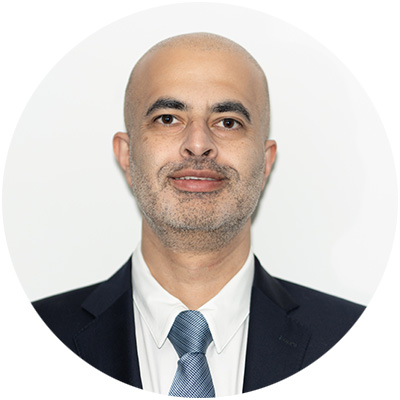

“Over the past eight years, Gbenga has led the build-out of Johnson & Johnson’s de novo global private markets platform—from strategy to team to execution—delivering a portfolio that has exceeded expectations while navigating challenging market cycles. His diverse experience across asset classes and institutions and his desire to develop talent, coupled with a collaborative and thoughtful leadership style, positions him well among the next generation of industry leaders. He is also a pleasure to work with, passionate about investing, has deep institutional relationships across the investment industry and is a highly valued member of the team. In my view, he is fully deserving of this nomination.”
—Neil Roache, CIO, Johnson & Johnson
The CHIEF INVESTMENT OFFICER Editorial Team shared a dozen questions with all our NextGen nominees and asked them each to pick six to answer. Their answers informed our decision to include them as a NextGen. Below are Gbenga Oladeji’s answers.
CIO: How are you dealing with market volatility?
Oladeji: We continue to rebalance the portfolio to maintain our strategic asset allocation targets. We run frequent liquidity stress tests across both public and private holdings and have a keen awareness of our liquidity budget. That allows us to rebalance and act during periods of market dislocation. We are currently at the lower end of our private market allocation range to preserve flexibility to optimally access less liquid, higher-yielding alternative investments when needed.
CIO: What is the best way to bring more diversity to the financial industry?
Oladeji: There should be greater grassroot initiative to continue to raise awareness about the opportunities that a career in finance and investment offers—diverse talent needs to have significant presence in the funnel. Secondly, I believe there should be greater emphasis on inclusion and integration after hiring and onboarding. This can be strengthened through formalized sponsorship and mentorship programs.
CIO: What asset class or investment strategy troubles you most right now, and why?
Oladeji: The increasingly concentrated structure of the U.S. equity market is a meaningful source of risk. Today, the 10 largest companies account for roughly 35% of the S&P 500 and an even larger share of total index returns. To build a more resilient investment program, I believe investors may need to broaden diversification and lean more heavily on high‑conviction active managers who can allocate beyond the narrow leadership of the index. A thoughtfully constructed alternative‑investment program—anchored by skilled, high‑conviction managers—can also serve as a diversifier and enhance overall risk‑adjusted return potential.
CIO: What investing decision have you made for your organization that you’re most proud of?
Oladeji: I am most excited about the unique transformative journey of leading the global build out of the de novo alternative investment strategy at Johnson & Johnson. Guiding this transformative effort—recruiting exceptional investment talent, establishing a disciplined governance process to support co-investing and constructing a portfolio aligned with our long-term glide path—has meaningfully contributed to helping our plans deliver strong risk-adjusted returns while advancing our funded-status objectives.
CIO: Who in asset management (a person, not a firm) has most influenced your growth as an institutional asset manager?
Oladeji: I’ve been fortunate to receive my formative training under two exceptional CIOs, MaDoe Htun and Joseph Boateng, both of whom were themselves trained by the legendary Myra Drucker. Their guidance shaped my approach to investing, leadership and disciplined decisionmaking. I’m deeply grateful for the time they invested in me and for the opportunities they created. They remain enduring sources of inspiration and support in my journey as an institutional investor.
CIO: What new skills do you think allocators or institutional investment teams need to be leaders in the field in the coming decade?
Oladeji: As a process‑driven investment executive, I believe an investment organization is only as strong as the talent it develops and the discipline of the processes it embeds. Over the next decade, top‑quartile investment teams will need to be genuinely AI‑proficient. Leadership will require integrating AI‑native systems across research, portfolio construction, risk management and operational workflows.
At Johnson & Johnson, we have begun that journey by encouraging every member of our team to explore how utilizing AI can help handle repetitive tasks and enhance analytical depth.