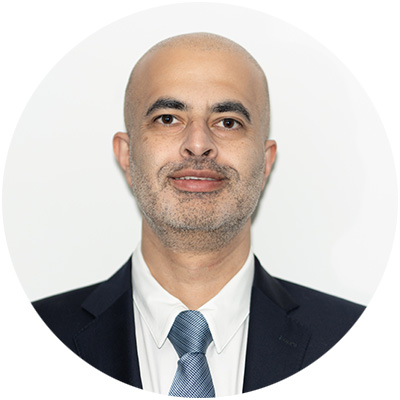
“Preet has been an exceptional partner since joining Carnegie in 2021. He has been instrumental in building an outperforming public equity portfolio, an area in which generating alpha has been particularly challenging. He has also expanded his impact across venture, growth and credit investments. His tenacity, attention to detail and analytical rigor consistently translate into strong results. He has earned my trust through both his execution and his commitment to our mission. I can always rely on him for candid, unvarnished perspectives, an invaluable asset in a field where sound judgment is critical.”
—Jon-Michael Consalvo, CIO, Carnegie Corporation of New York
The CHIEF INVESTMENT OFFICER Editorial Team shared a dozen questions with all our NextGen nominees and asked them each to pick six to answer. Their answers informed our decision to include them as a NextGen. Below are Preet Chawla’s answers.
CIO: How are you dealing with market volatility?
Chawla: Dealing with volatility is one of the most important traits for any investor. I will fully admit that I am not in a great mood when our managers are down, but the key is recognizing that emotional reaction, taking a breath and avoiding poorly thought-out decisions. Good decisions are usually made when your mind is calm and regulated. Unlike our managers, we do not have to make minute-by-minute decisions, so I have the benefit of taking a day or two before making even the quickest judgment calls. In this seat, the ability to make thoughtful decisions amid uncertainty is critical. That starts with knowing the managers we have partnered with, trusting their judgment and understanding the underlying assets they own well enough to assess the range of outcomes for the portfolio. It also means remembering our time horizon. With a duration of five years or more, the question is not how an asset is trading today, but where we believe it can be several years from now. From there, the job is to construct a high-quality, diversified portfolio that can withstand volatility and compound through it.
CIO: How can allocators insulate portfolios from growing headwinds created by wars and military conflicts, tariffs and trade shock, equity concentration risk, AI-related valuation questions and/or private market illiquidity?
Chawla: It’s important to recognize that no portfolio can be fully protected from every exogenous shock. However, a good process leaves you with a firm understanding of the known risks you are taking and whether you are being compensated for taking them. Evaluating these risks also requires nuance. For example, private market illiquidity depends heavily on what you own. A portfolio concentrated in early-stage venture capital carries very different liquidity risk than a high-quality private credit portfolio. Similarly, equity concentration risk has clearly risen as mega-cap technology companies have come to dominate major indices. Whether this ultimately proves to be a bubble is difficult to know, but concentration does increase potential downside if leadership changes. At Carnegie, we focus on constructing resilient portfolios, which are expected to perform well across different market environments. Roughly one-third of our public equity portfolio is allocated to portable alpha managers, and two-thirds to traditional equity managers. Our traditional equity portfolio is diversified enough to compound through a variety of shocks over a medium-term horizon, while our diversified portable alpha exposure gives us consistent outperformance should the index continue to perform strongly.
CIO: What traditional and/or alternative asset classes do you think are most important for institutional portfolios, and why?
Chawla: I believe private equity will remain one of the most important return drivers for institutional portfolios. That said, I would distinguish between the asset class overall and the best managers within it. On average, I am not sure private equity will meaningfully outperform public equities after accounting for its much higher fee load. Like any asset class that has delivered strong returns, private equity has attracted significant capital, new entrants and lower return hurdles as firms compete to deploy money in line with investor demand. However, a select group of high-quality private equity managers, both large and small, in the U.S., Europe and Japan, continue to create value through genuine operational improvement, rather than financial engineering alone. Those managers can still generate net IRRs in the high teens, which is an exceptional outcome for equity-like risk, even after factoring in illiquidity. I do not define risk here as volatility, but as the range of potential outcomes over a five-year period. For investors who can identify and access those managers, private equity can still deliver returns well above the cost of capital.
CIO: What asset class or investment strategy troubles you most right now, and why?
Chawla: Venture capital is the area that troubles me most right now. While broad judgments require nuance, the asset class has several characteristics that concern me. A large amount of capital has flowed into startups over the past several years, particularly in software and AI, and many of those companies are unlikely to exist a decade from now. I am a strong believer in AI and its long-term impact, but I worry that investors are paying prices that assume too much certainty, especially in AI applications and, potentially, parts of AI infrastructure. There will absolutely be extraordinary outlier winners, but the overall vintage may still disappoint. Venture also creates a difficult behavioral problem for allocators. When markets are hot, even mediocre assets can be validated by strong public markets, which makes discipline look wrong for a while. It is hard to sit out when others are celebrating, but I would rather tolerate temporary underperformance than invest based on a fear of missing out. We do invest in venture, but selectively, and we have passed on firms that many peers would be excited to access. Over time, I think venture will reward a small number of truly exceptional managers, while disappointing many allocators, especially as larger fund sizes make historic venture math harder to repeat.
CIO: What investing decision have you made for your organization that you’re most proud of?
Chawla: When we joined in 2021, Carnegie had a good public portfolio, but it was not fully aligned with the new team’s investment philosophy. Working with my colleagues Bradley Kay and Zach Mees, we restructured the public portfolio, with Bradley and Zach leading public diversifiers and me leading public equity. For public equity, I proposed a structure made up of roughly two-thirds traditional active managers and one-third portable alpha. Our traditional managers focus on less efficient markets such as biotech, China, India, Japan and Europe, while our portable alpha managers seek diversified alpha with index beta. Together, this creates a more resilient portfolio designed to outperform ACWI and exceed our cost of capital across a range of environments, including periods of equity concentration risk. While we have certainly benefited from strong managers and some good fortune, I am proud that the portfolio has outperformed ACWI by mid to high single digits over three and five years, with performance improving as changes were implemented. I am grateful for the opportunity to contribute, even in a small way, to Carnegie’s mission. At the same time, one of our best managers often says, “We are only as good as our next investment.” That is a useful reminder to stay humble, curious and focused on continuous iteration and improvement.
CIO: What new skills do you think allocators or institutional investment teams need to be leaders in the field in the coming decade?
Chawla: I think two traits will matter most: the ability to adapt and the ability to innovate. AI will have far-reaching implications, not only for the companies and assets that institutions own, but also for how investment teams do their work. For example, AI is likely to transform software, with some businesses thriving, while many others may not survive the next decade. At the same time, investors will have an opportunity to use AI to make their own processes more efficient, from conducting diligence to synthesizing information and writing memos. The institutions that adapt fastest to this new paradigm are likely to have an advantage in portfolio outcomes. Innovation will also be critical. What worked over the last 20 years may not work as well going forward. For example, when we began building our portable alpha portfolio in 2022 by partnering with high-quality multi-PM platforms, relatively few institutions were pursuing that approach. Today it has become much more common, and many of those platforms can no longer offer meaningful capacity. I believe investors who innovate responsibly and enter attractive opportunities early are more likely to succeed over the long run than those who simply follow strategies that have worked in the past.