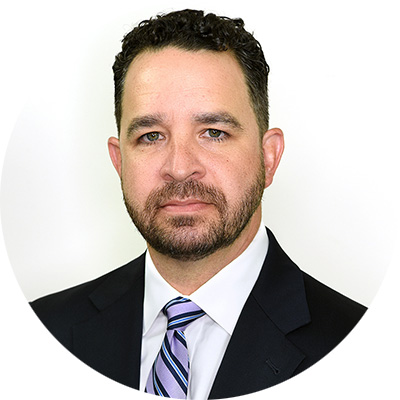

“I’ve known Drew since he joined the team as part of our rotational analyst program in early 2017. His growth since then has been remarkable—he’s developed world-class sourcing skills, a deep understanding of asset class construction and excellent judgment. He’s also a genuine team player who brings energy and positivity to the team, while serving as a true ambassador for the foundation and our mission. In short, we’re incredibly lucky to have Drew on our team, and I can’t think of anyone more deserving of this recognition.”
—John Barker, Vice President and Chief Investment Officer, The Kresge Foundation
The CHIEF INVESTMENT OFFICER Editorial Team shared a dozen questions with all our NextGen nominees and asked them each to pick six to answer. Their answers informed our decision to include them as a NextGen. Below are Drew L. Dolan’s answers.
CIO: How can allocators insulate portfolios from growing headwinds created by wars and military conflicts, tariffs and trade shock, equity concentration risk, AI-related valuation questions and/or private market illiquidity?
Dolan: Simple: Diversification. Our proactive approach to asset allocation ensures that we don’t have to be too reactive to the risks mentioned—though they are obviously all top of mind. It starts with comprehensive asset class reviews every two or three years. Each review focuses on one asset class at a time, revisiting its purpose by asking: 1) has it done what it was intended to do? and 2) what role should it play going forward? The outcome of these exercises can range from adjusting the liquidity profile of an asset class (e.g., public equity) to eliminating one entirely (e.g. credit) if its intended objectives are better achieved elsewhere in the portfolio. While this approach doesn’t fully insulate the portfolio from external shocks, it creates balance and positions us to navigate evolving market conditions without becoming overly reliant on any single driver of return or source of risk.
CIO: What traditional and/or alternative asset classes do you think are most important for institutional portfolios, and why?
Dolan: While equities—particularly private equity, venture capital and public markets—are typically the primary long-term drivers of portfolio growth, the past five years have reinforced the critical role commodity-linked assets play in institutional portfolios. Given a foundation’s perpetual mandate, inflation represents a major long-term risk. As a result, having assets or strategies in the portfolio that can perform well during periods of heightened inflation is extremely important.
After nearly a decade of near-zero interest rates and no meaningful inflation shocks since the 1980s, it became easy to underappreciate inflation risk. But in just a short period, we’ve experienced a post-COVID demand shock, multiple wars that disrupted global energy and commodity flows, and a structural increase in commodity demand driven by reshoring, electrification and broader industrial policy shifts.
These dynamics have reinforced the importance of maintaining portfolio exposure to real assets and inflation-sensitive strategies—not only as a hedge, but as a critical component of building resilient, long-duration portfolios capable of weathering a wide range of macroeconomic environments.
CIO: What asset class or investment strategy troubles you most right now, and why?
Dolan: Like many investors, software exposure remains top of mind. Over the past 15 years, software has been a major driver of growth across both public and private markets. Today, however, artificial intelligence’s rapidly advancing coding capabilities are beginning to challenge many traditional software business models. For a long-term investor, that concern quickly evolves into opportunity: identifying which firms and strategies are best positioned to capitalize on this shift. That means partnering with venture managers we believe can consistently access and win in early-stage AI, while also aligning with the right hedge funds—particularly in long/short strategies—that can effectively distinguish the likely winners from the losers in this rapidly evolving landscape.
CIO: What should be an investment trend, but isn’t (yet)?
Dolan: I believe AI will have profound implications across nearly every dimension of education, from personalized learning and curriculum development to workforce training and administrative efficiency. While companies and institutions are beginning to build in the space, the category remains in its early stages. Much like defense technology evolved into a distinct investment vertical, I could see AI-enabled education emerging as its own meaningful category over time—likely smaller in scale, but still highly impactful.
CIO: What investing decision have you made for your organization that you’re most proud of?
Dolan: These efforts are always highly collaborative, but I’m particularly proud of leading the development of our investment strategy around the energy transition. The process began with a comprehensive mapping of the opportunity set across asset classes, strategies and sectors, culminating in a white paper that connected decarbonization and energy transition themes to broader structural economic trends. From that work, we identified the power sector as our primary area of focus, which has since led to three fund commitments. The work is ongoing, particularly as we expand our scope beyond the U.S., where we are finding that opportunity sets can differ meaningfully across geographies.
CIO: What new skills do you think allocators or institutional investment teams need to be leaders in the field in the coming decade?
Dolan: This is less about developing an entirely new skill and more about preserving an essential one: authenticity. AI will become an increasingly powerful tool across all facets of the investment process, enhancing analysis, diligence and decisionmaking. But institutional investing remains fundamentally a people business. The ability to build genuine relationships, earn trust and maintain strong human judgment will continue to be what sets leading teams apart.