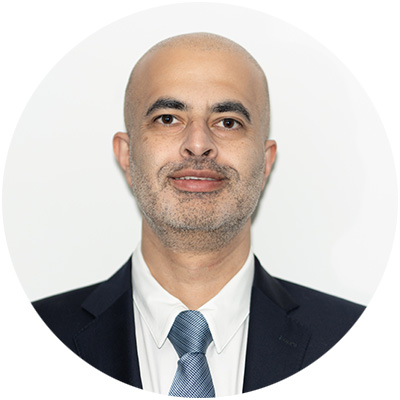

“Connor is a thoughtful and disciplined investor. His deep credit experience, paired with his rigorous approach to due diligence, has enabled the systems to build a high quality direct private credit portfolio that has delivered strong returns for Missouri educators. In addition, Connor has strengthened our organization by leading the development of our internal direct credit infrastructure.”
—Craig Husting, CIO, The Public School and Education Retirement Systems of Missouri (PSRS/PEERS)
The CHIEF INVESTMENT OFFICER Editorial Team shared a dozen questions with all our NextGen nominees and asked them each to pick six to answer. Their answers informed our decision to include them as a NextGen. Below are Connor Quinn’s answers.
CIO: What is the best way to bring more diversity to the financial industry?
Quinn: Diversity of experience and perspective are the most critical. The industry should be more open to professionals who take less traditional life paths but have accumulated unique, valuable experiences. Similarly, professionals with specialties in a particular field or a different educational background would likely be advantageous hires for investment teams.
CIO: Do you view country-by-country regulatory fragmentation around ESG an opportunity for your portfolio, or a risk?
Quinn: We view it as an opportunity. The prevalence of implementing ESG constraints over the past decade has led to a dearth of capital investing in energy. It would be challenging to be bullish on AI while holding a constrained energy view. Fortunately, we’re not limited in that regard and can step up as a capital provider for our partners that are participating in projects related to energy reliability and grid hardening.
CIO: What traditional and/or alternative asset classes do you think are most important for institutional portfolios, and why?
Quinn: If you’re managing against long-duration liabilities, I think private markets, broadly, offer compelling opportunities for differentiated sources of alpha. Having spent time on both the public and private credit side, I’ve seen firsthand the unique financings that do not exist in public markets, typically due to some idiosyncratic friction. There are attractive returns to be had with a risk profile that offers some combination of durable cash flows, valuable collateral and significant protections.
CIO: What investing decision have you made for your organization that you’re most proud of?
Quinn: More than any particular trade or investment idea, I’m proud of being able to help influence the process of building out our team and developing new team members. Human capital is the most valuable resource for an investment organization, and building a successful culture around it is a challenging endeavor in itself. You can easily spoil your efforts by making one or two mistakes in these areas. I’m proud we’ve been able to manage these endeavors well, especially given our recent growth.
CIO: Who in asset management (a person, not a firm) has most influenced your growth as an institutional asset manager?
Quinn: Leadership at MO PSRS/PEERS, including Craig Husting and John Tuck, has been the most influential, in that they afforded me an opportunity and entrusted me with responsibility immediately. On the investment side, I’ve received an up-close education on institutional investing best practices. I’ve been afforded experiences across asset classes that I’ll be able to leverage in the future. I’ll always remember, “Path matters!” From a managerial standpoint, I’ve been able to watch industry veterans effectively communicate and mold a team into a cohesive culture across a multiple-office footprint.
CIO: What new skills do you think allocators or institutional investment teams need to be leaders in the field in the coming decade?
Quinn: For investment teams to be successful over the long term, I think they will have to figure out a way to simultaneously address two buckets of skills that could be at odds with each other. One: Organizations need to continue developing requisite fundamental hard and soft skills, including critical thinking, communication, accounting and financial modeling. These are particularly important for more junior professionals. Two: AI infrastructure and proficiency should be developed across the team to promote scale, deep research and compounded learning. Shortcutting the fundamentals to chase the AI skills will lead to long-term issues, but pursuing both in lockstep could be a great approach for investment teams.